I get this question most often from Muslim buyers abroad, and more from British Pakistani families than any other group. They want to buy in Dubai. They have the deposit. And they will not take a conventional mortgage, because the charge on it is riba.
The short answer is that you do not have to. Every major UAE bank offers home finance certified by its own Sharia supervisory board, and since 2022 those contracts have been defined in UAE federal law rather than left to the bank's paperwork.
This piece explains how each structure actually works, what you can borrow in each buyer category, and the one clause in a lease-to-own contract that people sign without reading.

The short version
Yes, you can buy in Dubai without an interest-bearing loan. Several UAE banks do this under their own religious supervisory board.
The difference is that the bank does not lend you money. It buys the property itself, then either sells it to you in instalments or rents it to you until it becomes yours.
You can borrow the same amount as you could with a normal loan. If you live in the UAE, you need 20 percent of the price. If you are buying from abroad, budget about half. Either way, add roughly 7 to 8 percent for fees.
One thing to ask about. In the rent-to-own version the property stays in the bank's name until the end, and moving it into your name needs its own separate contract. Get that contract on the day you sign, not after your last payment.
If that is all you needed, you are done. The rest explains how each option works and what the limits are for your buyer type.
If you want the detail
One thing before the detail. I am a property consultant, not a scholar. What follows describes how these contracts are built and what the law says about them. Whether a particular product satisfies your own understanding is a question for your bank's Sharia board and, if you want a second view, your own scholar. Nothing below is a ruling.
What makes a mortgage Sharia-compliant?
The difference is not the monthly number. It is what the contract is over.
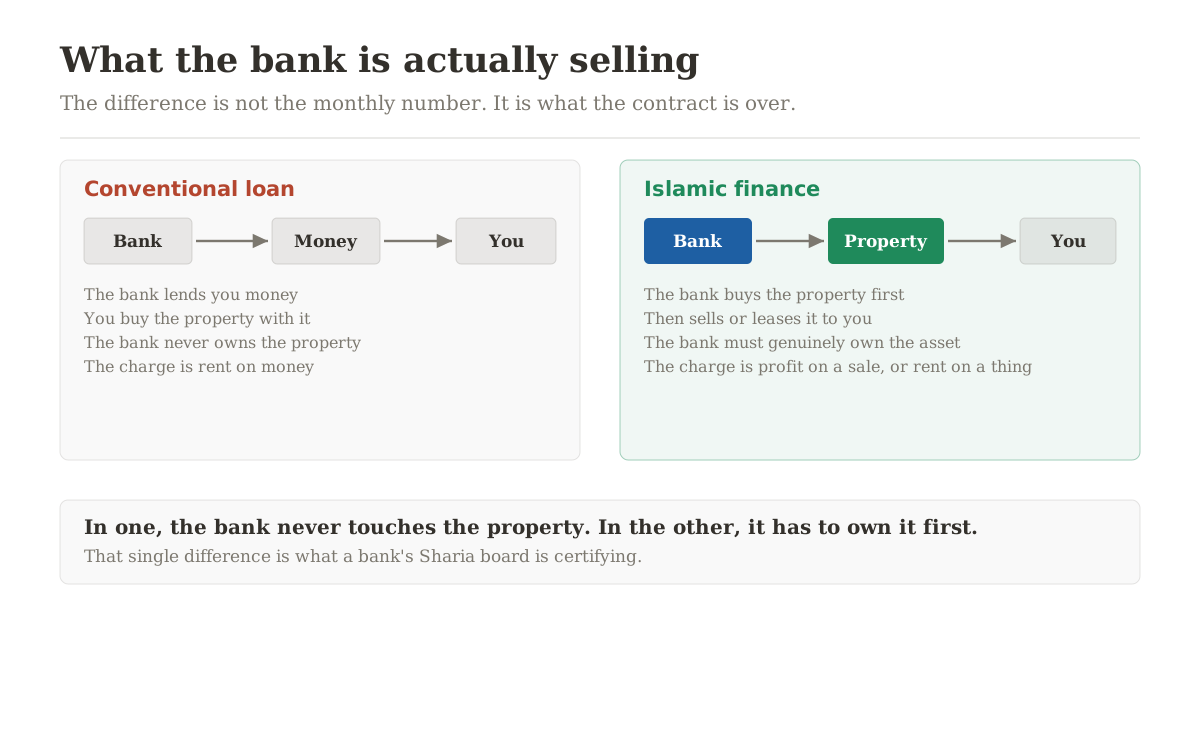
In a conventional mortgage the bank lends you money and charges you for the use of that money. The bank never owns the property. The charge is rent on cash, which is the thing riba describes.
In Islamic home finance the bank has to acquire the asset itself. It buys the property, then either sells it to you at a disclosed profit or leases it to you and transfers ownership at the end. The bank takes real ownership, and with it real risk, for at least some window of time. The charge is profit on a sale or rent on a thing, not a charge on money.
That is the whole distinction, and everything below is a variation on it.
Since Federal Decree-Law No. 50 of 2022, these contracts are codified in the UAE Commercial Transactions Law at Articles 468 to 497. Murabaha, Ijara, Musharaka, Mudaraba, Istisna and Salam each have a statutory definition now. That matters practically: the protections described below are law, not marketing.
Ijara: the rent-to-own structure
Ijara is the most common structure in the UAE, and it is the one people mean when they say rent to own. Its full name is Ijarah Muntahia Bittamleek, a lease that ends in ownership.
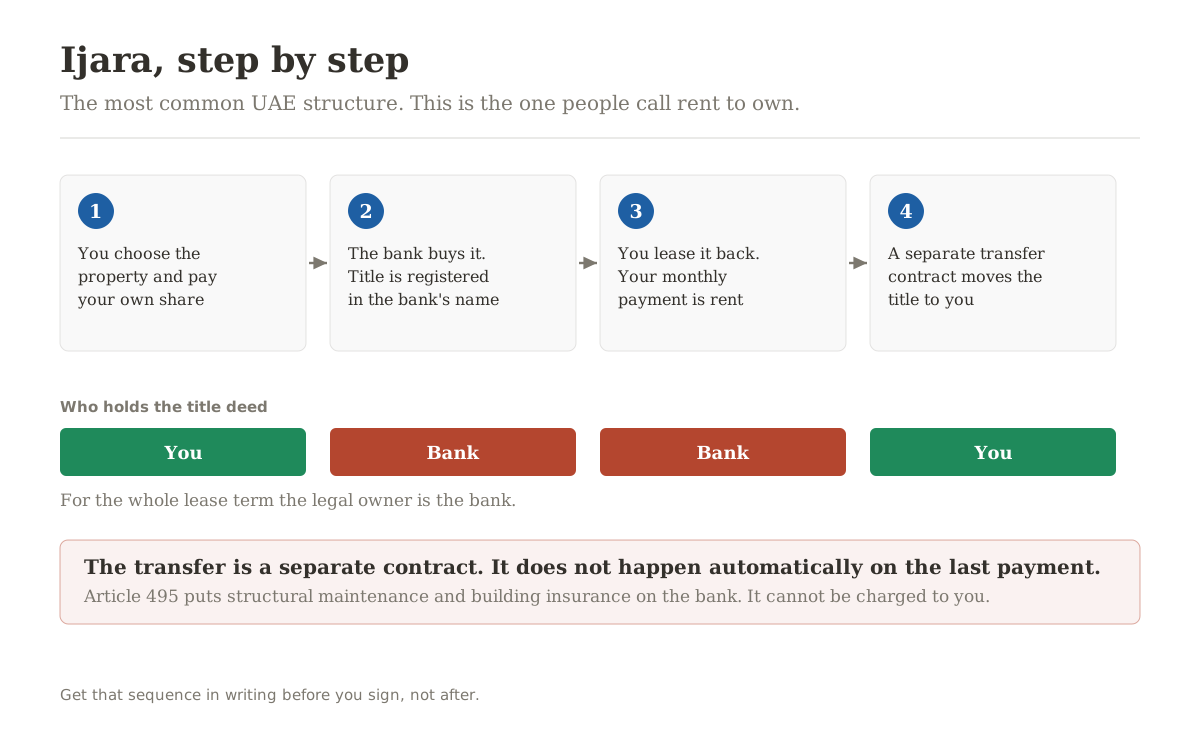
You choose the property and pay your own share. The bank buys it, and the title is registered in the bank's name. You then lease it from the bank, and your monthly payment is rent rather than a loan repayment. At the end, ownership moves to you.
Two things in that sequence are worth more than the rest of this article.
The first is a protection. Article 495(3) puts basic maintenance and building insurance on the lessor, which is the bank, and says those costs cannot be charged to you. In a conventional mortgage you own the building and every structural problem is yours from day one. Under a properly drafted Ijara, for the years the bank is the registered owner, it is carrying that. Read your own contract, because banks structure around this in different ways, but the statutory position is clear.
The second is a trap. Ownership does not transfer automatically when your last payment clears. The transfer requires its own contract, separate from the lease, and the law allows several forms: a gift, a sale at a nominal price, a gradual transfer, or a sale at a pre-agreed price. If that transfer contract is not executed alongside your lease at the start, you can finish paying and still not hold the title.
Ask for the transfer undertaking at signing, in writing, and read what triggers it. Not after. If you want me to look at the wording on a specific offer before you sign, send it to me on WhatsApp.
Murabaha: the disclosed-profit sale
Murabaha is simpler and it suits people who want certainty above everything.
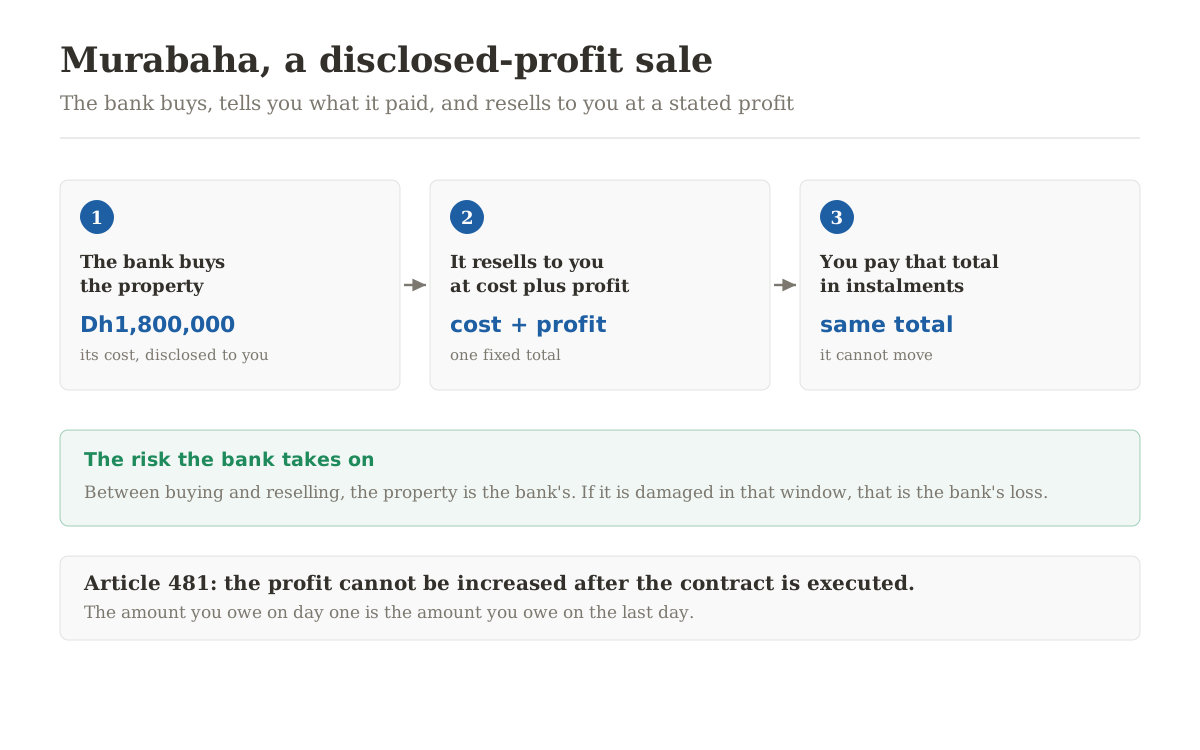
The bank buys the property and tells you exactly what it paid. It then resells it to you at that cost plus a stated profit, payable in instalments. You know the total on day one.
Article 481 defines Murabaha as a sale at cost plus a fixed profit that cannot be increased after the contract is executed. That is a harder guarantee than a conventional fixed rate, which usually fixes for one to five years and then floats. Here the total price is set at signing and there is no reversion rate hiding behind it.
There is a real trade-off. Because the profit is locked for the full term, banks price that certainty in, and the headline number can look higher than a conventional teaser rate. Compare the total you will pay, not the first year. The mortgage calculator will show you the full cash requirement including every fee, and you can put the Murabaha total next to a conventional total over the same term.
Diminishing Musharaka: buying the bank out in steps
The third structure is a partnership. You and the bank buy the property together, and you buy the bank's share out over time.
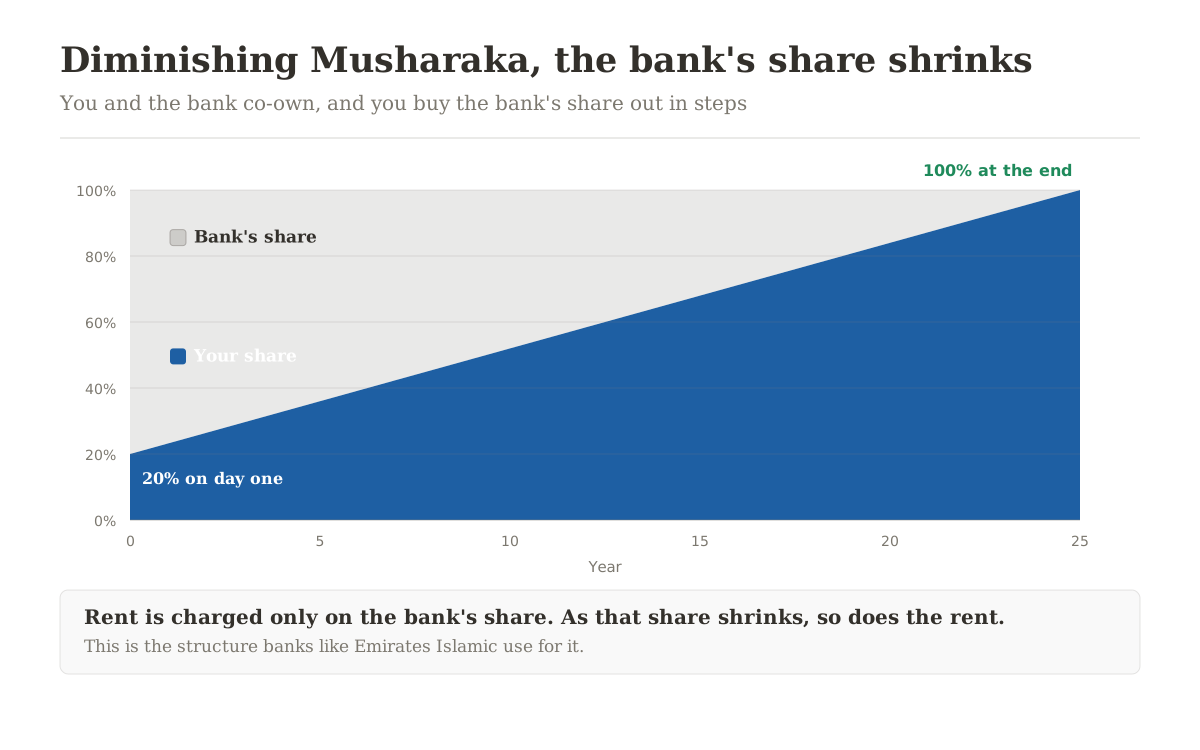
If you put in 20 percent, you own 20 percent and the bank owns 80. Each month you pay two things: a rental for using the bank's portion, and an instalment that buys another slice of it. Over the term your share climbs to 100 percent and the bank's falls to nothing.
The elegant part is that rent is charged only on what the bank still owns. As you buy the bank out, the rental component shrinks with its share. Emirates Islamic uses this structure, among others.
Which structure should you ask for?
| Ijara, rent to own | Murabaha | Diminishing Musharaka | |
|---|---|---|---|
| Who holds title during the term | The bank | You, from the resale | Both, in shares |
| What you pay monthly | Rent | Instalments on a fixed total | Rent plus a share purchase |
| Total price fixed at signing | Rent can be reviewed | Yes, and cannot rise | Rent can be reviewed |
| Structural maintenance | The bank, per Article 495 | You | Shared in proportion |
| Best for | Most residential buyers | Certainty over everything | Buyers who want the cost to fall as they build equity |
There is no universally better answer. Ijara is what most UAE buyers end up with. Murabaha suits you if a fixed total matters more than a low starting number. Musharaka suits you if you expect to overpay and want the cost to fall as you do.
How much can you borrow, and what deposit do you need?
This is the part people get wrong, so here it is by category. The UAE Central Bank sets these caps, and they apply identically to Islamic and conventional finance. Choosing a Sharia-compliant product does not cost you borrowing power.
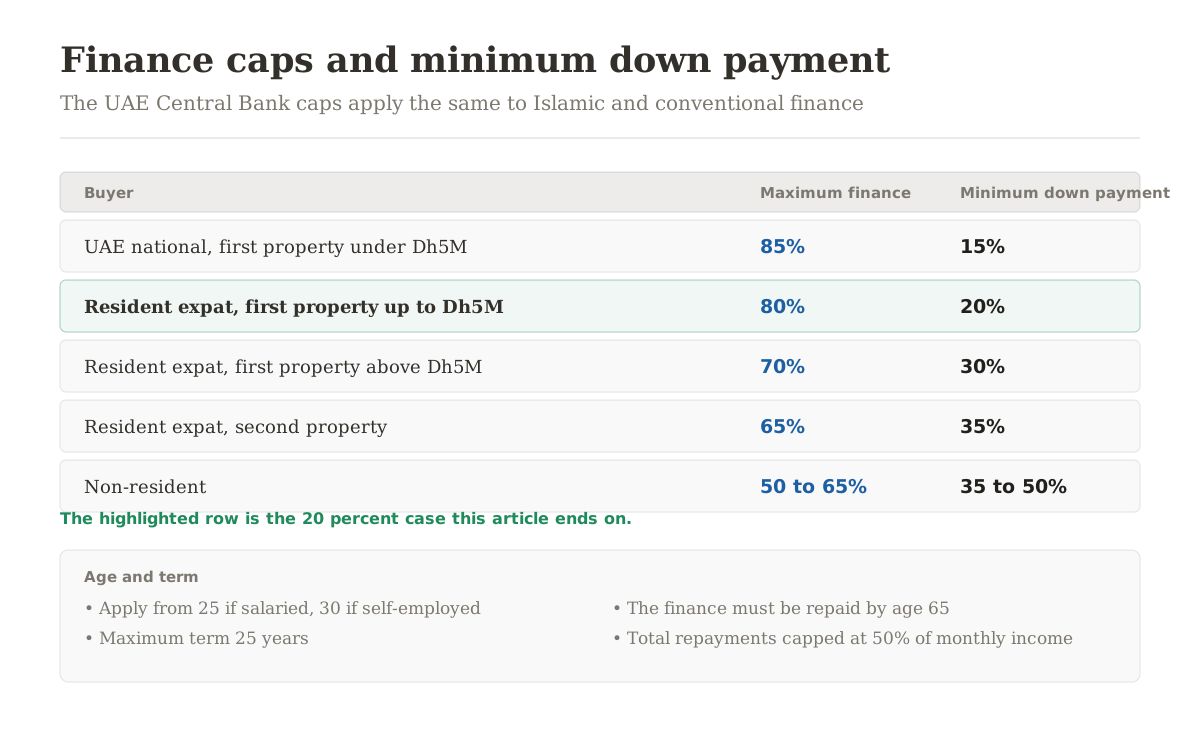
| Buyer | Maximum finance | Minimum down payment |
|---|---|---|
| UAE national, first property under Dh5M | 85% | 15% |
| Resident expat, first property up to Dh5M | 80% | 20% |
| Resident expat, first property above Dh5M | 70% | 30% |
| Resident expat, second property | 65% | 35% |
| Non-resident | 50 to 65% | 35 to 50% |
Note the gap in that last row, because it is the one that catches overseas buyers. The regulatory ceiling for a non-resident is around 65 percent, but that is the ceiling, not the offer. Individual bank policy is usually tighter. ADIB publishes 50 percent for its non-resident home finance, and Dubai Islamic Bank's off-plan product caps at 50 percent too, which I covered in off-plan mortgages during construction.
Plan on funding half the purchase yourself if you are buying from abroad.
Age limits, term and the income test
Three more gates, and all three apply whichever structure you choose.
- Term. Twenty five years maximum, and the finance must be fully repaid by age 65. The term you actually get is the smaller of the two, so a 45 year old is looking at 20 years and a 50 year old at 15.
- Age at application. ADIB publishes a minimum of 25 for salaried applicants and 30 for the self-employed on its non-resident product.
- Income. Total monthly repayments across all your debts are capped at 50 percent of monthly income. ADIB's published non-resident minimum is a salary of Dh15,000 a month, or annual turnover of Dh3,000,000 if you are self-employed.
There is one more restriction worth knowing if you are self-employed and buying from overseas: ADIB limits that case to properties in Abu Dhabi and Dubai, while salaried non-residents can buy in any emirate.
If you want to see what all of this means for your own numbers, the mortgage calculator applies the caps by buyer type and adds every fee. I also walked through the inputs in how much you can actually borrow in Dubai.
If you are buying from abroad
The British Pakistani buyer I mentioned at the top is the clearest case, but this applies to any Muslim buying from outside the UAE.
You can get Sharia-compliant finance as a non-resident. Dubai Islamic Bank and ADIB both lend to non-residents, and DIB's off-plan product is explicitly open to them. What changes is the arithmetic and the paperwork, not the availability.
Budget for roughly half the price in cash, plus about 7 to 8 percent of the price in fees on top. Expect heavier documentation than a resident: passport, six months of bank statements, proof of income in your home country and usually a credit report from where you live. Give it four to six weeks rather than two.
One practical note that has nothing to do with religion. Currency is a real risk here. The dirham is pegged to the US dollar at 3.6725, so if you earn in sterling your dirham cost moves with the pound against the dollar, and your instalments are fixed in dirhams regardless.
Does an SPV change anything?
People ask this because they have heard that buying through a company is more efficient. It is a fair question and the answer is clean.
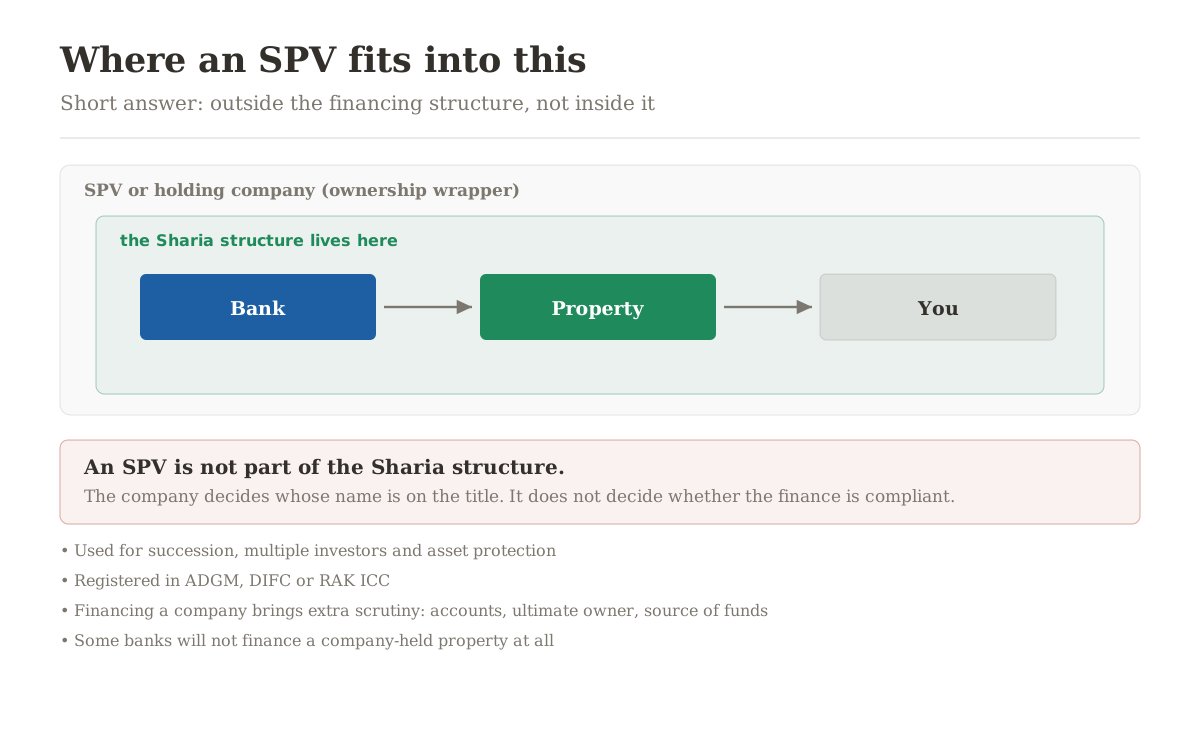
An SPV is not part of Islamic home finance. It sits outside the financing entirely. The Ijara or Murabaha or Musharaka is an arrangement between you and the bank over the property. A special purpose vehicle is a company that holds the title, usually registered in ADGM, DIFC or RAK ICC, and people use them for succession planning, for holding a property between several investors, and for asset protection.
The company decides whose name is on the title. It does not decide whether the finance is compliant.
Where the two do interact is in the underwriting, and not helpfully. Financing a company-held property means the bank underwrites the company as well as you: accounts, the ultimate beneficial owner, source of funds, the shareholding structure. Some banks will not finance a company-held property at all. So an SPV can make the ownership neater and the financing harder, and if you are buying with finance, sort the finance first and the structure second.
What it costs, and the fee that is not doubled
There is a persistent worry that an Ijara means paying the 4 percent Dubai Land Department transfer fee twice, once when the bank buys and again when it transfers to you. It does not. UAE regulations exempt Islamic property transactions from the double registration charge, specifically so the product stays cost-competitive.
Otherwise the cost stack is the same as a conventional purchase. On a Dh1,800,000 property with Dh1,440,000 of finance, that runs to roughly Dh137,760, which is about 7.65 percent of the price on top of your down payment. The mortgage calculator itemises all of it.
Which UAE banks offer this
Dubai Islamic Bank, Abu Dhabi Islamic Bank, Emirates Islamic, Sharjah Islamic Bank, Ajman Bank and Al Hilal all run home finance under a Sharia supervisory board. Several conventional banks also operate Islamic windows.
One point of genuine debate, and I would rather raise it than have you find it later. Most UAE Islamic banks benchmark their profit rate to EIBOR, the same interbank rate conventional lenders use. Some scholars are comfortable with this on the basis that a benchmark is only a measuring stick and the underlying contract is a real sale or lease. Others are not comfortable with it at all. The bank's Sharia board takes a position on this and publishes it. If it matters to you, ask for the fatwa and the board's composition before you apply, not after.
What I would check before signing
- The transfer undertaking on an Ijara. Get it at signing, and read what triggers it.
- Who carries structural maintenance and building insurance, and whether the contract matches Article 495.
- For Murabaha, the total price, not the profit rate. It is fixed, so ask for the number.
- Whether the rent under an Ijara or Musharaka can be reviewed, how often, and against what.
- The early settlement terms. Ask what you pay to exit in year three.
- The bank's Sharia board: who sits on it, and the fatwa covering this exact product.
Where I land
If you have 20 percent of the price and you have been holding off because you did not want to pay riba, you can stop holding off. There are six or more UAE banks running home finance under a Sharia supervisory board, the contracts are defined in federal law, and the Central Bank gives them exactly the same borrowing limits as conventional products. You are not accepting a worse deal to get a compliant one.
Be accurate about which 20 percent, though. That figure is the resident expat buying a first property under Dh5 million. If you are reading this from London or Karachi and you are not resident here, the honest number is closer to half the price in cash, plus fees. That is the main thing I would correct in most of the advice circulating on this topic.
The structures are real, the protections are statutory, and the banks are regulated the same way as everyone else. What is left is choosing between Ijara, Murabaha and Musharaka on their merits, and reading the transfer clause.
If you want to go through your own situation, whether that is which structure suits you or whether a specific offer letter says what the salesperson said it says, message me on WhatsApp and send me the numbers.
A note on sources
Contract definitions are from the UAE Commercial Transactions Law, Federal Decree-Law No. 50 of 2022, Articles 468 to 497, with Murabaha at Article 481 and the Ijara maintenance obligation at Article 495(3). Loan to value caps are the UAE Central Bank mortgage regulations, which apply to Islamic and conventional finance alike. Non-resident eligibility figures are ADIB's own published criteria for non-resident home finance. Fee arithmetic uses the same constants as the calculator on this site.
Provided for information only, not financial, legal or religious advice. Confirm any product against the issuing bank's Sharia board and your own scholar.
Frequently asked questions
Yes. Dubai Islamic Bank, Abu Dhabi Islamic Bank, Emirates Islamic, Sharjah Islamic Bank, Ajman Bank and Al Hilal all offer home finance certified by a Sharia supervisory board, and several conventional banks run Islamic windows. Since Federal Decree-Law No. 50 of 2022 the contracts are defined in UAE federal law at Articles 468 to 497.
A conventional bank lends you money and charges you for the use of that money, and never owns the property. An Islamic bank has to acquire the property itself, then sell it to you at a disclosed profit or lease it to you and transfer ownership at the end. The charge is profit on a sale or rent on an asset, not a charge on money. That is the whole distinction.
You pay your own share, the bank buys the property and registers the title in its name, you lease it back and your monthly payment is rent, and at the end ownership transfers to you. The bank is the legal owner for the whole lease term. Under Article 495(3) basic maintenance and building insurance are the bank's obligation and cannot be charged to you.
No, and this is the clause people miss. The transfer needs its own contract, separate from the lease. UAE law allows it as a gift, a sale at a nominal price, a gradual transfer, or a sale at a pre-agreed price. Ask for the transfer undertaking in writing at signing rather than after your last payment.
The bank buys the property, discloses exactly what it paid, then resells it to you at that cost plus a stated profit, payable in instalments. Article 481 says that profit cannot be increased after the contract is executed, so the total you owe on day one is the total you owe on the last day. That is a harder guarantee than a conventional fixed rate, which usually fixes for one to five years then floats.
The same as a conventional one, because the UAE Central Bank caps apply identically. 15 percent for a UAE national on a first property under Dh5 million, 20 percent for a resident expat on the same, 30 percent above Dh5 million, 35 percent on a second property, and 35 to 50 percent for a non-resident. Choosing a Sharia-compliant product does not reduce how much you can borrow.
Yes. Dubai Islamic Bank and ADIB both lend to non-residents, and DIB's off-plan product is explicitly open to them. The regulatory ceiling is around 65 percent but bank policy is tighter in practice: ADIB publishes 50 percent for non-resident home finance. Budget about half the price in cash plus roughly 7 to 8 percent in fees.
The finance must be fully repaid by age 65, and the maximum term is 25 years, so you get whichever is smaller. A 45 year old is looking at 20 years and a 50 year old at 15. On ADIB's non-resident product the minimum age at application is 25 if you are salaried and 30 if you are self-employed.
Total monthly repayments across all your debts are capped at 50 percent of monthly income, which is the same debt burden rule applied to conventional finance. ADIB's published minimum for non-resident applicants is a salary of Dh15,000 a month, or annual turnover of Dh3,000,000 if you are self-employed.
No. Because the bank buys the property and later transfers it to you, people assume the Dubai Land Department transfer fee is charged on both legs. UAE regulations exempt Islamic property transactions from that double registration charge, specifically so the product stays cost-competitive with conventional finance.
No. An SPV sits entirely outside the financing. The Ijara, Murabaha or Musharaka is an arrangement between you and the bank over the property; an SPV is a company that holds the title, usually registered in ADGM, DIFC or RAK ICC, used for succession, multiple investors or asset protection. It decides whose name is on the title, not whether the finance is compliant. Financing a company-held property brings extra scrutiny and some banks decline it entirely.
Most UAE Islamic banks benchmark their profit rate to EIBOR, the same interbank rate conventional lenders use. Some scholars accept this on the basis that a benchmark is only a measuring stick while the underlying contract is a genuine sale or lease. Others do not accept it. Each bank's Sharia supervisory board takes a published position, so ask for the fatwa and the board's composition before you apply.
Ijara is what most UAE residential buyers end up with and it puts structural maintenance on the bank. Murabaha suits you if a fixed total matters more than a low starting number, since the price cannot rise after signing. Diminishing Musharaka suits you if you expect to overpay, because rent is charged only on the bank's remaining share and falls as you buy it out.