On 20 August, ADCB and Ellington Properties announced pre-approved financing for off-plan buyers. Days later Dubai Islamic Bank launched an off-plan finance product of its own. Both cap out at 50 percent of the property value, and most of the coverage has framed that as banks loosening up.
It is not. Fifty percent is the legal ceiling. What moved is when you can draw the money, and that is a genuinely useful change, for a narrower group of people than the headlines suggest.
What was actually announced
| Bank | Partner | Max finance | Structure | Rate |
|---|---|---|---|---|
| ADCB | Emaar Development (July 2026) | 50% | Pre-approval, valid 12 months, renewable to handover | From 3.49%, fixed 3 years, limited period |
| ADCB | Ellington Properties (20 Aug 2026) | 50% | Same structure | From 3.49%, fixed 3 years, limited period |
| Dubai Islamic Bank | None, any UAE developer | 50% | Funds released to developer at construction milestones | Not published |
The ADCB deals waive processing and valuation fees. DIB's product is Shariah compliant and open to UAE nationals, residents and, notably, non-residents.
The 50 percent is not the news
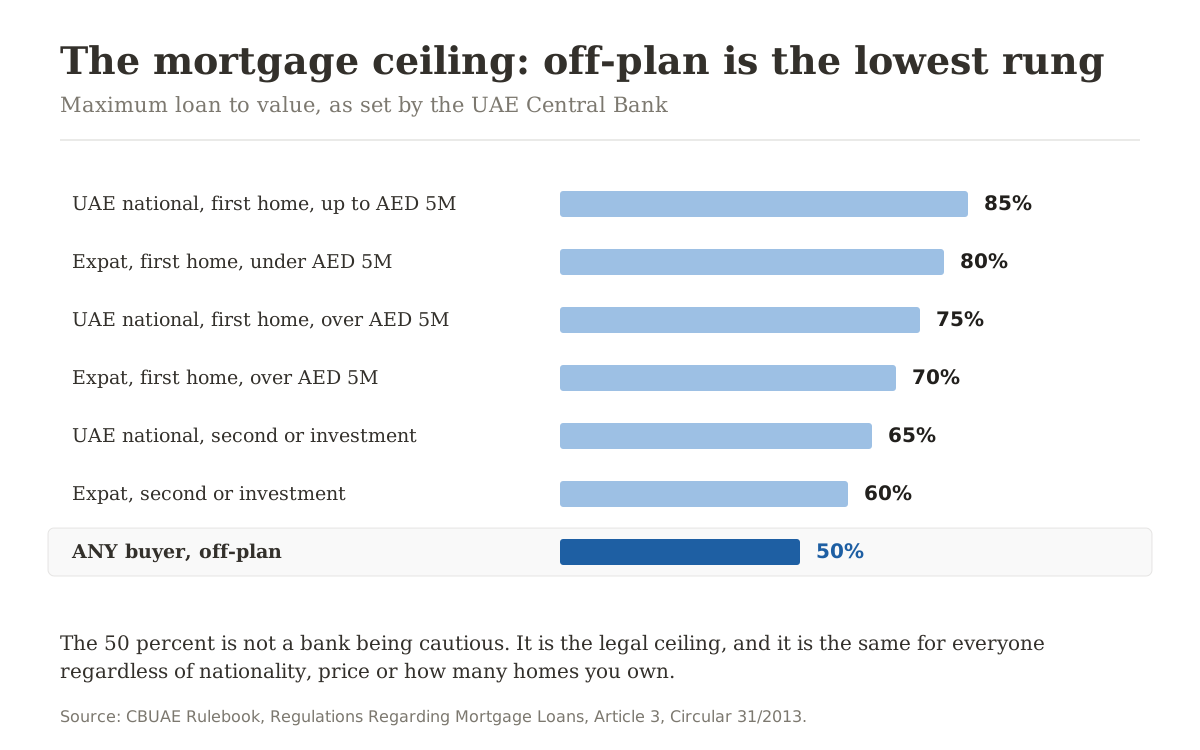
The Central Bank's mortgage regulations are unambiguous. Article 3 of Circular 31/2013, still in force, sets the maximum loan to value for off-plan at 50 percent "regardless of purpose, value, or category of purchaser". A UAE national buying a first home under AED 5 million can borrow 85 percent. The same person buying off-plan can borrow 50.
So when two banks both announce 50 percent, they have not competed their way to a number. They have both stopped at the wall. Any coverage that reads this as loosening credit has missed what the number is.
What did change, and it matters
The old problem with an off-plan purchase was never really the total. It was the shape of the cash flow. A 60/40 or 50/50 payment plan calls for money at construction milestones, sometimes for three years, and a conventional mortgage would not release a dirham until handover. So the construction period came out of your own pocket, and the mortgage only refinanced you at the end.
DIB's product releases funds to the developer progressively, at each milestone. During construction you pay only the profit component, and that amount grows as more tranches are drawn. The full instalment of principal plus profit starts at handover or 24 months from taking the finance, whichever comes first.
ADCB's is a different animal. It is a pre-approval, not a drawdown facility: 12 months of validity, renewable annually until handover, so you know the money will be there when a milestone call arrives.
One solves cash flow. The other solves certainty. They are not competing products and a buyer could reasonably want both.
The difference that actually decides it
ADCB's terms are tied to a developer. Emaar and Ellington today, presumably others later. If you are buying from anyone else, those terms are not available to you.
DIB's is developer agnostic: any freehold property from any developer across the UAE. For anyone buying outside the big two names, that is the more relevant announcement, and it is the one that got the smaller headline.
About that 3.49 percent
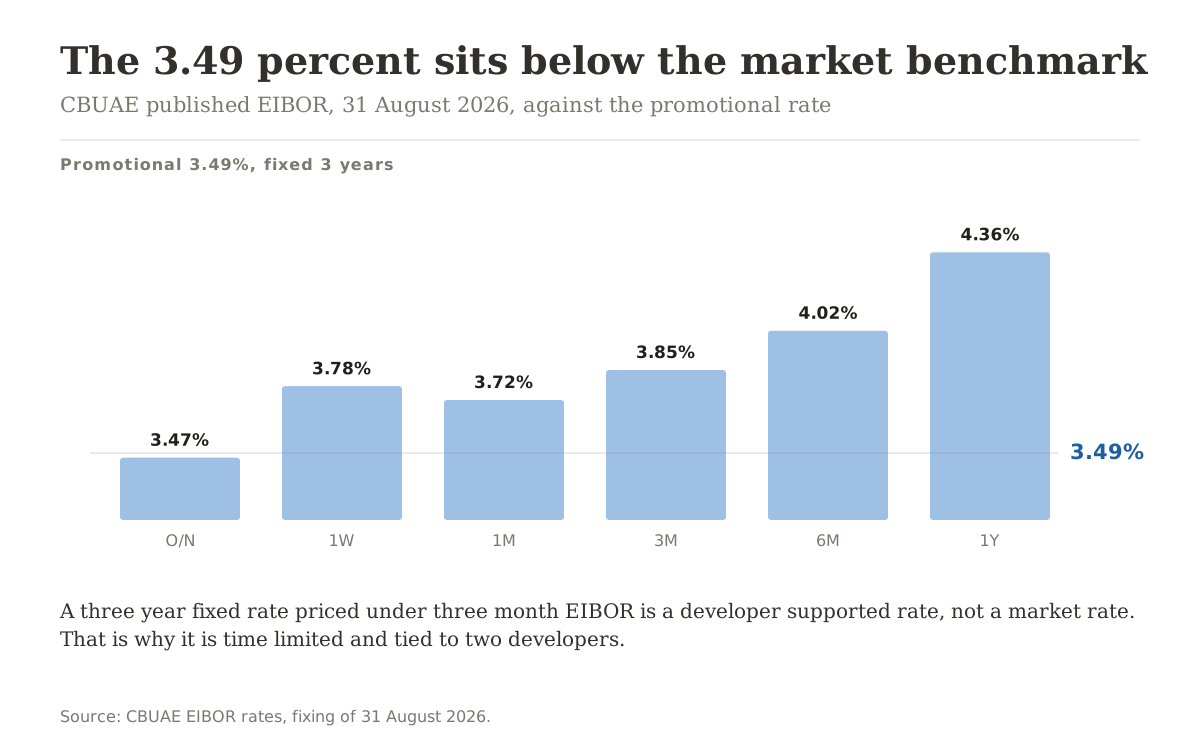
Take the 3.49 percent seriously as an offer and not at all seriously as a forecast.
On the Central Bank's own fixing for 31 August 2026, three month EIBOR was 3.85 percent and one year EIBOR was 4.36 percent. ADCB is offering to fix for three years at 3.49, below its own short term benchmark and well below the twelve month cost of money. That is not a bank winning on efficiency. It is a developer supported acquisition rate, which is exactly why it is described as available for a limited period and attached to two specific developers.
Use it if you qualify. Do not build a ten year hold model on it, and read carefully what the rate reverts to after year three, because that reversion is the real cost of the product.
What has not changed at all
This is the part worth being blunt about, because none of it moved:
- You still need the other 50 percent. On a AED 2 million off-plan unit, that is AED 1 million of your own money, and the financing does not reduce it by a dirham.
- Debt burden ratio is still capped at 50 percent of gross salary and regular income, and the bank must stress test you at 2 to 4 percentage points above the actual rate.
- Maximum borrowing is still 7 years of annual income for expatriates and 8 for UAE nationals.
- Maximum tenor is still 25 years.
- Deferred principal, which is what a profit only construction period is, applies to investment loans and cannot run longer than 5 years from first drawdown.
- If you are buying to let, the bank must deduct at least two months of rental income from the affordability calculation to allow for void periods.
- End of service benefit cannot be used as a source of repayment.
The risk nobody is pricing
Start paying profit during construction and you are servicing debt on a building that does not exist yet. That is fine while the schedule holds.
Now read DIB's trigger again: full instalment begins at handover or 24 months, whichever comes first. If a project runs long, and Dubai projects do run long, you move to full principal and profit on an asset you cannot rent, cannot sell easily and cannot live in. You would be covering a full mortgage payment out of income with nothing coming back the other way, possibly for a year or more.
That is a manageable risk if you have gone in with your eyes open and priced a delay into your own model. It is a serious one if the construction-stage financing is what made the purchase feel affordable in the first place.
Who this is genuinely for
A buyer with the deposit and the income, on a front loaded payment plan, who would otherwise have to find milestone money from savings or sell something to raise it. For that person this is a real improvement and it was overdue.
It is not a route in for someone who cannot fund 50 percent. It does not make an expensive unit cheap. And it does not change the arithmetic on whether the project itself is any good, which is still the only question that decides whether the purchase works.
My take
The useful signal here is not the products, it is the direction. Banks structuring around construction milestones and partnering directly with developers means they are getting more comfortable with off-plan risk on their own books. That is a mild vote of confidence in the pipeline.
I would still rather see a buyer put 50 percent down on a completed unit that earns rent from month one than finance half of something that pays nothing for three years. But if you were buying off-plan anyway, and the payment plan was the friction, this removes real friction. Check the reversion rate before you sign, and confirm current terms with the bank, because promotional pricing moves and this article does not.
Frequently asked questions
A maximum of 50 percent of the property value. That is the Central Bank ceiling under Article 3 of Circular 31/2013 and it applies regardless of purpose, value, or whether you are a UAE national, a resident or a non-resident.
DIB's off-plan product is stated as available to UAE nationals, residents and non-residents. The ADCB developer partnerships do not state non-resident eligibility, so confirm directly with the bank.
With DIB you pay only the profit component while the bank releases funds to the developer at milestones, and the amount grows as more is drawn. The full instalment of principal plus profit starts at handover or 24 months from taking the finance, whichever comes first.
No. On the CBUAE fixing of 31 August 2026, three month EIBOR was 3.85 percent and one year EIBOR 4.36 percent. A three year fixed at 3.49 is below the benchmark, which is why it is offered for a limited period and only through two developer partnerships. Check what it reverts to after year three.
No. You still fund 50 percent yourself. On a AED 2 million unit that is AED 1 million. What changes is the timing of the borrowed half, not its size.
Delay. The full instalment begins at handover or 24 months, whichever comes first. If the project runs past that, you pay principal plus profit on a property you cannot rent, sell easily or live in, with nothing coming back the other way.