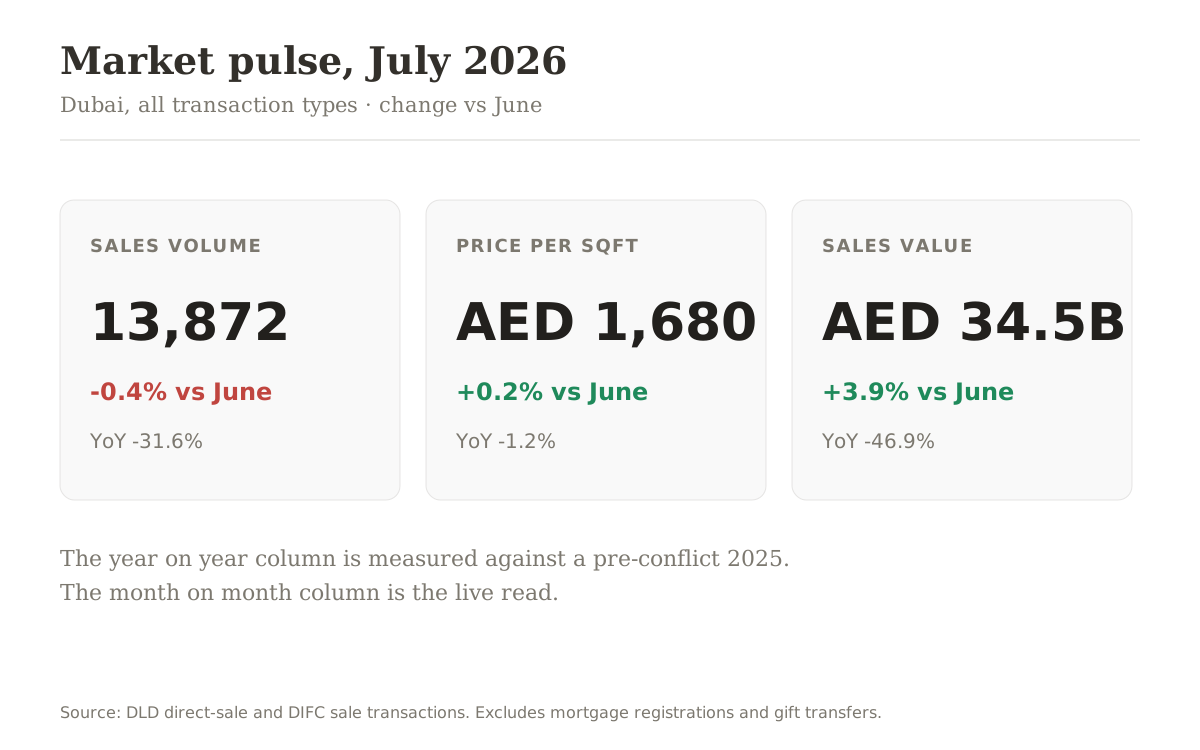
July closed with 13,872 sales worth Dh34.5 billion, at an average of Dh1,680 per square foot. Volume was flat on June, down 0.4 percent. Value was up 3.9 percent. Price per square foot was up 0.2 percent. Against July last year, volume is down 31.6 percent and value is down 46.9 percent.
Both of those readings are true and they point in opposite directions. Below I take the month apart chart by chart, and then I explain why I think August is the month to act if you were already going to buy this year.
Read the two columns differently
The year on year column is measured against a July 2025 that came before this year's regional tension. Second quarter hotel occupancy in Dubai fell to around 10 percent from about 80 percent in February. Flights were disrupted. A market does not lose a third of its transaction volume because buyers changed their minds about Dubai; it loses it because people could not travel and would not sign.
So the annual comparison tells you what happened to the region. The monthly comparison tells you what is happening to the market now. Right now the monthly column reads: value up, price per foot up, plot transactions up 16.5 percent, mortgage lending up 55 percent. That is a market finding its floor, not one still falling.
Where the money went
Apartments did 11,759 deals for Dh17.8 billion. Villas did 1,322 for Dh7.8 billion. Plots did just 268 for Dh6.9 billion. Commercial did 515 for Dh1.9 billion.
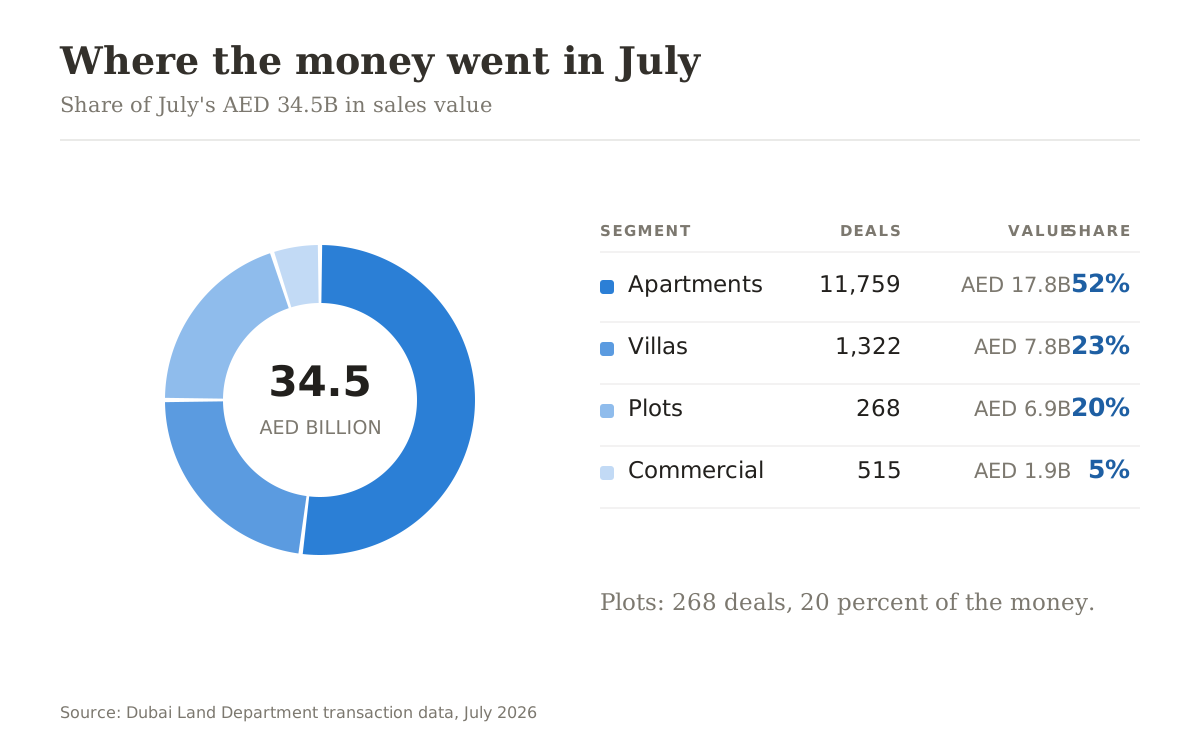
Divide value by volume and the shape of the month gets clearer. The average apartment sale was about Dh1.51M. The average villa was about Dh5.9M. The average plot was about Dh25.7M. Two hundred and sixty eight land deals moved a fifth of all the money in the market.
The villa number is the one to watch. Villa value is down 56.4 percent year on year against apartments at 27.6 percent. The top of the market took the bigger hit and has been slower to come back, which is exactly what you would expect when the buyer is an overseas family that could not fly in.
Twelve months of volume
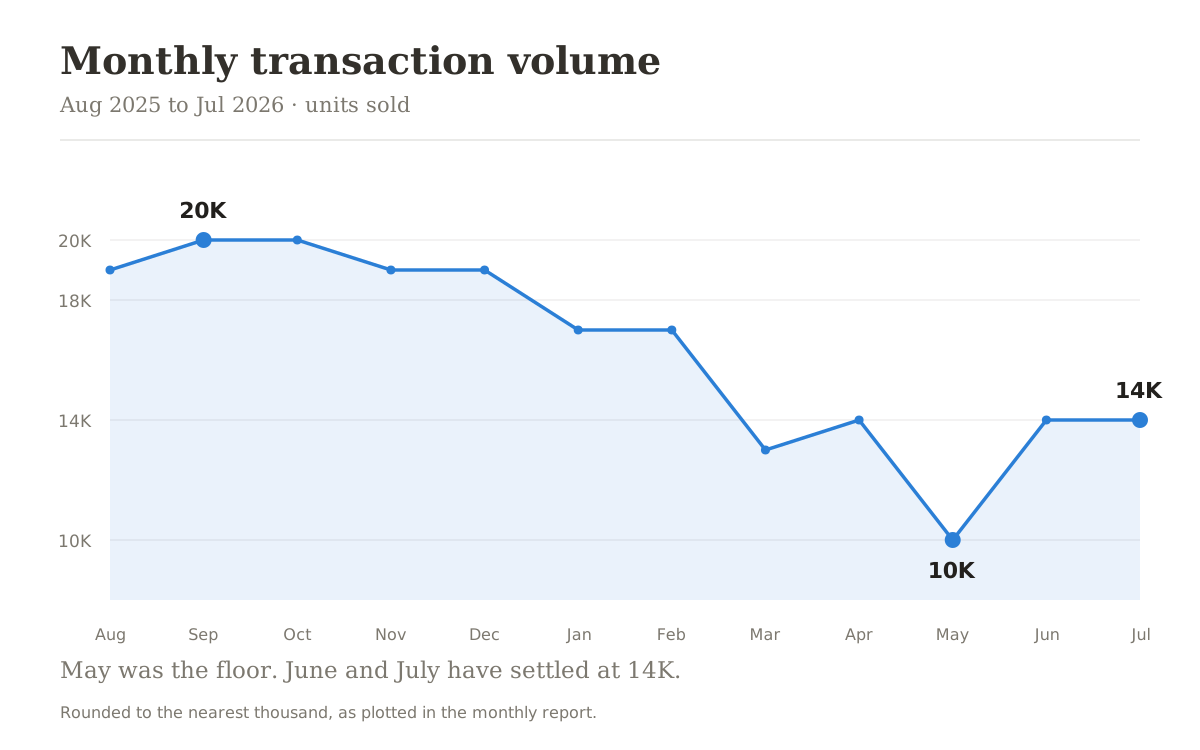
The market ran at 19K to 20K deals a month through last autumn, drifted to 17K in the new year, and bottomed at 10K in May. June and July have both settled at about 14K. Two consecutive months at the same level after a fall like that is the definition of a floor. It is not a recovery yet. It is a market that has stopped going down.
The twelve year line
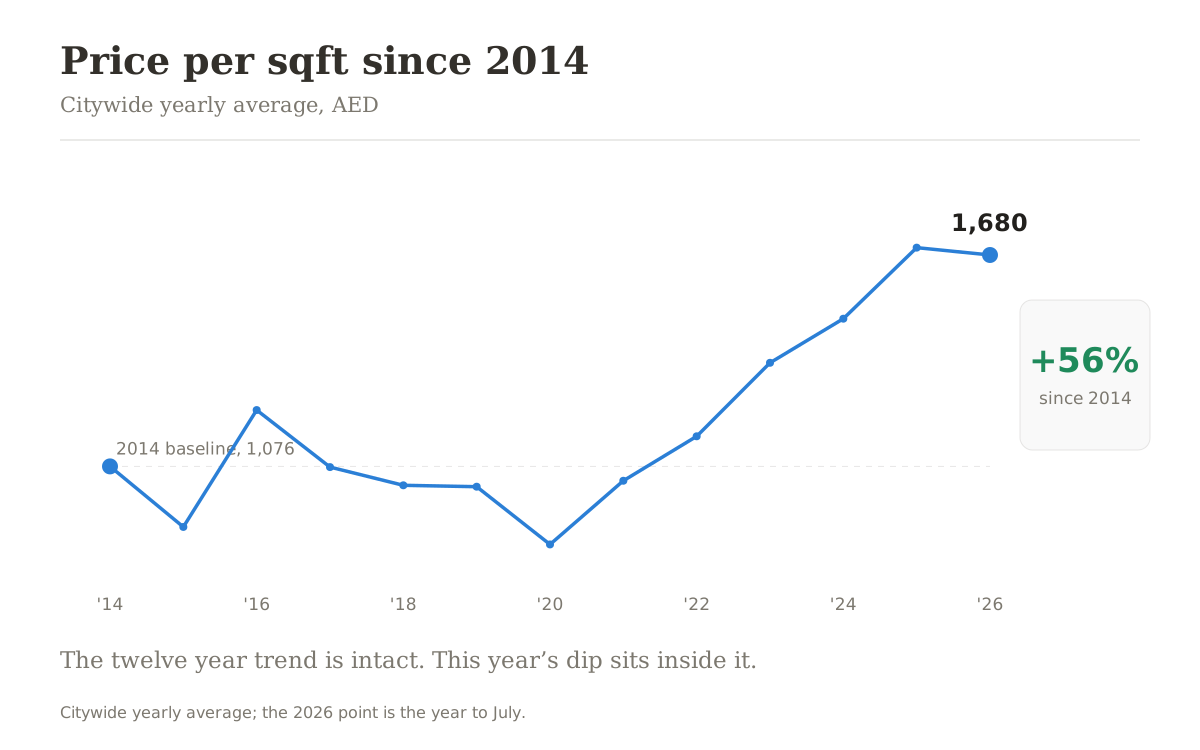
Zoom out and this year barely registers. Citywide price per square foot has gone from Dh1,076 in 2014 to Dh1,680 today, up 56 percent, through a 2015 correction, a 2020 collapse and a 2022 to 2025 run. The 1.2 percent the market is down this year is a wobble inside a twelve year trend, not a break in it.
I am not telling you the trend guarantees the future. I am telling you that if you only ever look at the year on year column, you will misread where this market sits.
Primary versus resale
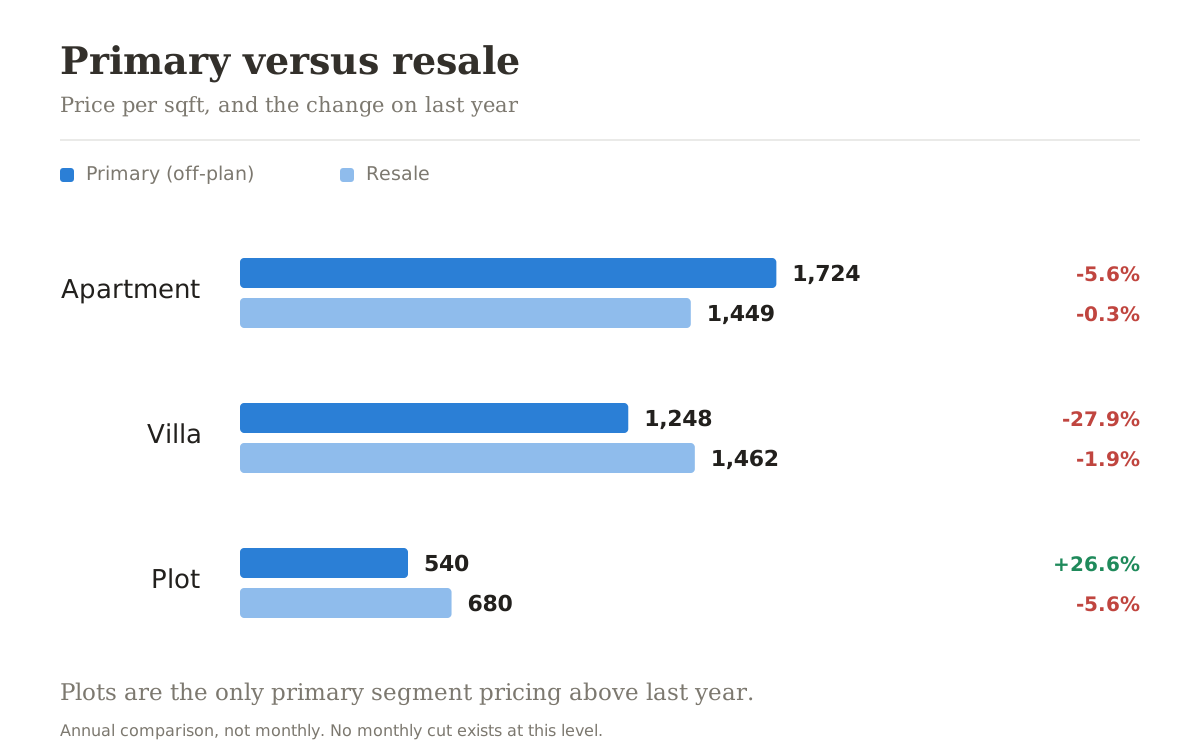
| Type | Primary | vs 2025 | Resale | vs 2025 |
|---|---|---|---|---|
| Apartment | Dh1,724 | -5.6% | Dh1,449 | -0.3% |
| Villa | Dh1,248 | -27.9% | Dh1,462 | -1.9% |
| Plot | Dh540 | +26.6% | Dh680 | -5.6% |
Three things worth pulling out of that table.
First, off-plan apartments are pricing 5.6 percent below last year while resale apartments are essentially flat. Developers have moved on price; individual sellers have not. That is the gap you are being offered right now.
Second, primary villas at Dh1,248 are pricing below resale villas at Dh1,462. New villa product is being released cheaper than the equivalent second hand stock. That does not usually happen.
Third, and this is the one I would not skip: plot prices in the primary market are up 26.6 percent on last year. That is the only segment in the table pricing above 2025. Developers are paying more for land while they discount finished product. Land is the input cost of every launch that comes after this one. I read that as the clearest forward signal in the whole report.
How July actually traded
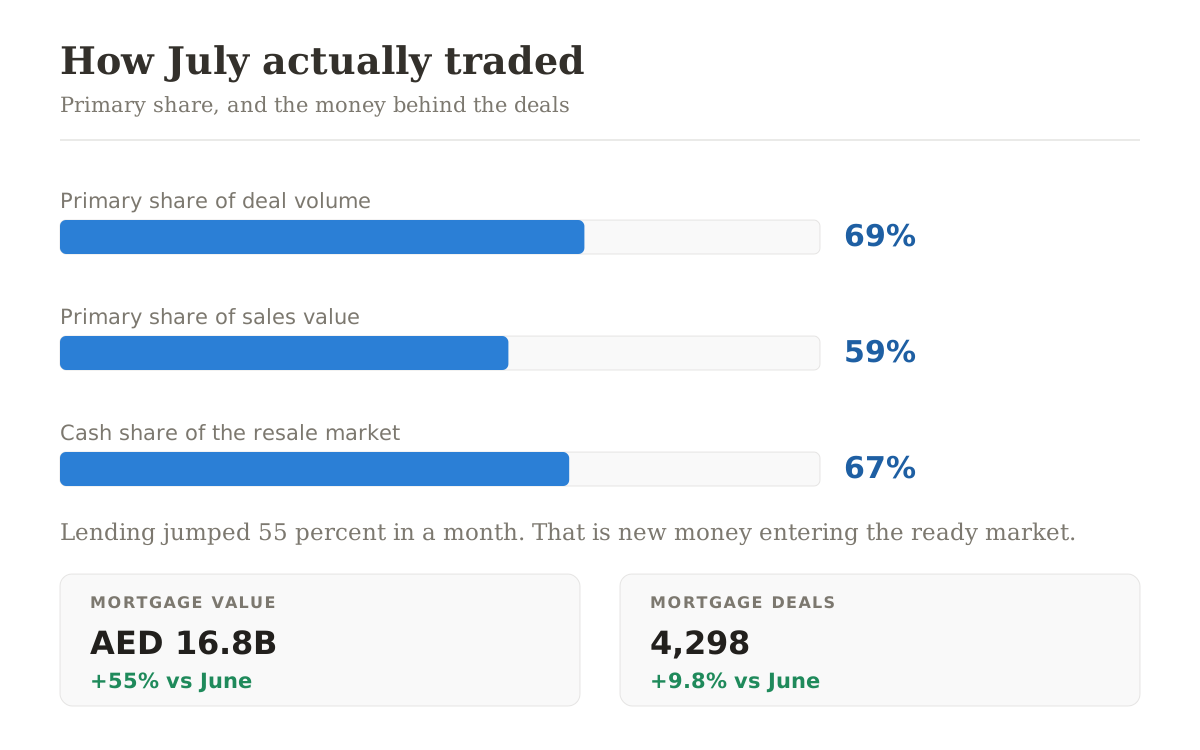
Off-plan took 69 percent of deal volume but only 59 percent of value, which tells you the ready market still holds the expensive end. Two thirds of resale buyers paid cash.
The number that moved most was financing. Mortgage value hit Dh16.8 billion, up 55 percent on June, across 4,298 registrations, up 9.8 percent. Value rising five times faster than deal count means the loans got bigger, not just more numerous. Banks lending harder into a soft market is not a signal you get at a top.
Rents are moving before prices
| Average annual rent | vs June | |
|---|---|---|
| Apartment | Dh65,900 | +4.6% |
| Villa | Dh175,000 | -5.4% |
| Commercial | Dh58,700 |
Apartment rents rose 4.6 percent in a month while apartment sale prices moved 0.2 percent. When rent moves and price does not, yield widens. For a buyer, that window is the good half of a soft market, and it closes from the price side once buyers come back.
Where the demand is
By unit volume the five busiest areas in July were Dubai South, Al Barsha South Fourth, Jebel Ali, Wadi Al Safa 4 and Jabal Ali First, in that order, with Dubai South well ahead of the rest. That is a volume list, not a value list. It is the affordable and mid-market end of the city doing the work, close to the new airport corridor.
At the other end, the month's largest apartment sales were Dh166M at Aman Residences Tower 2 in Jumeirah Second, Dh90M at Passo by Beyond on Palm Jumeirah, Dh76M at Orla Infinity by Omniyat, also on the Palm, and Dh65M at The Rings in Jumeirah Second. The largest villa sales were Dh73M at Lavita in The Oasis, Dh63M at Signature Villas, Dh56M in Emirates Hills and Dh49M on Palm Jebel Ali.
Three projects sold out in a day
This is the part that does not show up in the averages. Three launches sold out completely within a day of release this cycle: RAW District by Imtiaz on Sheikh Zayed Road, Arancia by Beyond in City of Arabia, and Linar by Alef on the Al Mamzar waterfront.
Listings in projects like those are scarce, and the buyers are mostly end users paying a premium to secure a unit rather than investors flipping for a quick exit. A market with a 10K floor in May and same day sell-outs in July is not one market. It is a soft average with pockets of real competition inside it, and the pockets are where the buyers are.
Why I think August is the window
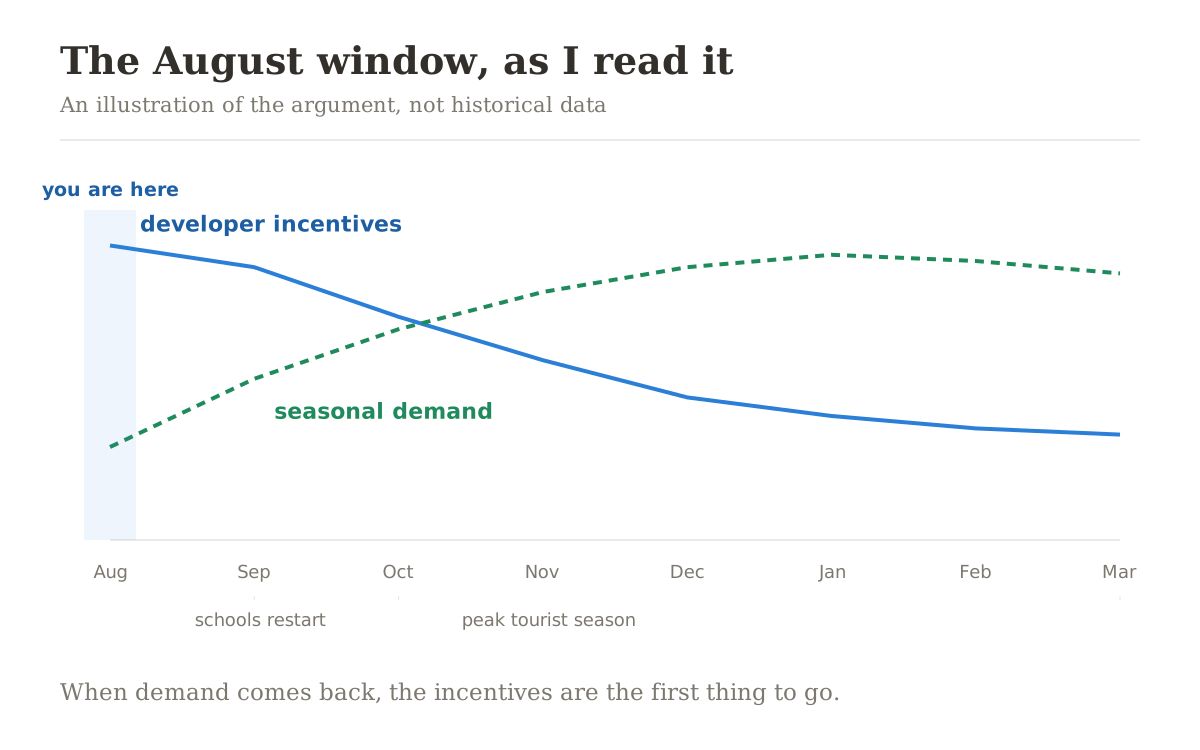
Right now, several developers are absorbing the DLD registration fee, running direct discounts, or extending payment plans well past handover, on top of pricing that in most segments is still below last year. That combination exists because demand is at its seasonal low and the region has just been through a bad quarter. It is a function of weak demand, not generosity.
Here is what is scheduled to happen next, and none of it is speculative.
- Schools restart at the end of August and into September. Families who left for the summer come back, and families relocating time their move to the school year. That is the single most reliable demand event in Dubai's calendar.
- The cooler months from October bring back peak tourist season, and with it short-term rental demand. Occupancy and nightly rates rise together from roughly October to March.
- Completions due this year have been landing behind schedule, which keeps ready inventory tighter than the headline pipeline suggests.
- Mortgage lending is already up 55 percent in a month, and plot prices are up 26.6 percent on last year. Both are leading indicators, and both are pointing the same way.
Put those together. Demand rises from September. Ready supply is tighter than the pipeline implies. Rents are already moving. Financing is already loosening. When a developer sees that demand return, the first thing that gets withdrawn is not the price, it is the incentive: the fee waiver goes, the post-handover tail shortens, the discount quietly disappears from the price list.
None of that guarantees where prices go. But it is the kind of setup that has historically pushed rents and yields up and pulled incentives back once developers see demand return. If you were already going to buy this year, the discount, fee waiver and payment plan on the table today are worth pricing in before that happens. I would not wait more than a month.
The part none of us controls
I am not going to pretend the risk is not there. Tension can return to the region, and if it does, everything above changes. We watched it happen this year: second quarter occupancy at around 10 percent, volumes down a third, the top of the market down more than half. Nobody controls that, and nobody should sell you a forecast that pretends otherwise.
So the honest framing is this. Buying now is a position that the situation continues to improve from here. If you think it will get worse, wait, and I respect that. I would rather you sit out a month than take a view you do not hold because a broker pushed you into it.
But if you think the situation improves, then this is the month where the improvement has not yet been priced into what developers are asking, and the incentives are still on the table. That is the whole argument.
What I would do this month
- Get the full incentive package in writing, not the headline discount. A fee waiver, a post-handover tail and a discount are three different amounts of money, and they are not interchangeable. I ran that math in discount versus DLD fee waiver.
- Price the ready market against the launch. Resale apartments are flat on last year while primary is 5.6 percent down, so on a like for like basis the off-plan discount is real right now. Check it per unit, not per headline. See off plan versus secondary.
- Compare the plan on a timeline, not on the brochure. Put cash, mortgage and the developer's schedule side by side in the payment plan comparator and check the financing in the mortgage calculator.
- Do the yield after service charges, not before. Rents are rising and that is the good news, but the net yield calculator is where a deal proves itself.
- Do not buy a launch because it is a launch. I applied all of this to a specific one in my read on Valia by Emaar, which is a good tower priced against a market that is currently offering better structures elsewhere.
Where I land
July is a floor, not a recovery. Volume flat, value up, price per foot up, lending up sharply, rents moving, land getting more expensive, and finished product still discounted. That is a market where the seller is more motivated than the buyer, and those do not last through a season change.
If you want the shortlist of which launches and ready units actually fit this pattern right now, message me and I will send it with the numbers attached rather than the brochures.
Sources: Dubai Land Department transaction data for July 2026, covering DLD direct-sale and DIFC sale transactions and excluding mortgage registrations and gift transfers, as compiled in my July monthly market report. Hotel occupancy figures from Moody's second quarter estimate. Previous month: the June 2026 update. Half year context: the H1 2026 market report. Provided for information only, not financial or investment advice.
Frequently asked questions
July recorded 13,872 sales worth Dh34.5 billion at an average of Dh1,680 per square foot. Against June, volume was flat at minus 0.4 percent while value rose 3.9 percent and price per square foot rose 0.2 percent. Against July 2025, volume is down 31.6 percent and value down 46.9 percent, but that comparison is measured against a period before this year’s regional tension. June and July both settling near 14,000 deals after a 10,000 floor in May is what a floor looks like.
For a buyer who had already decided to buy this year, August is the strongest month of the ones in front of us. Developers are currently absorbing the DLD fee, discounting directly and extending payment plans past handover, because demand is at its seasonal low. Schools restart from late August, peak tourist season runs October to March, completions are landing behind schedule, and mortgage lending is already up 55 percent in a month. When demand returns, the incentive is the first thing withdrawn, not the price. That is a view that the region keeps improving, and it should be taken as one.
Because the comparison base is a July 2025 that came before this year’s regional tension. Dubai hotel occupancy fell to around 10 percent in the second quarter from about 80 percent in February, and flights were disrupted. Transaction volume falls that far when buyers cannot travel and will not sign, not because demand for Dubai property structurally changed. The month on month column is the more useful read of where the market is now, and it is positive on value, price per square foot, plot deals and lending.
Plots are the only primary segment pricing above last year, up 26.6 percent, while primary apartments are down 5.6 percent and primary villas down 27.9 percent. Developers are paying more for land at the same time as they discount finished product. Land is the input cost of every launch that follows, so I read it as the clearest forward-looking signal in the July data: the projects launched after this land is built on are unlikely to be cheaper than the ones on the table today.