I get asked the same question every time the headlines shift: does regional tension actually move Dubai property? My honest answer is that it works through a chain, not a switch. The link in that chain most people miss is the Strait of Hormuz, and what flows through it.
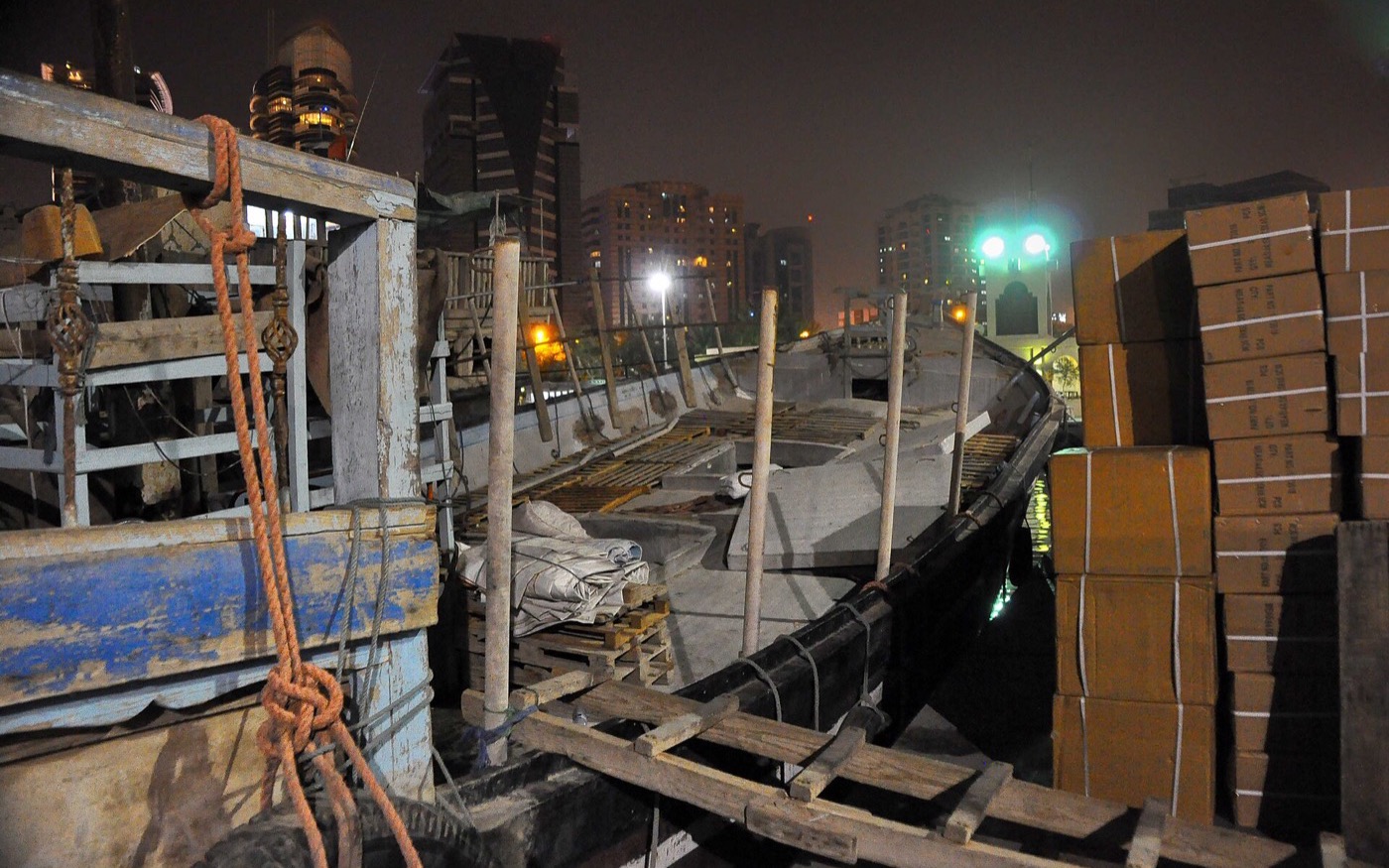
The chokepoint nobody can route around
The Strait of Hormuz carries roughly 20 million barrels of oil per day, about 25% of the world's seaborne oil trade, plus close to 20% of global LNG. There is no real alternative route for most of that volume. When tension rises in or around the Strait, the cost shows up fast: war-risk insurance premiums on tankers jump, shipping reroutes or slows, and freight rates climb. Those costs land on every cargo moving through the Gulf, not just oil.
Dubai sits right next to this chokepoint. So the logic runs the other way too. As tension eases, that friction comes off. Insurance normalises, shipping schedules tighten up, and the trade that runs through Dubai's ports and free zones speeds up. I am hedging deliberately here, because nobody can promise a specific outcome from talks. But the direction of travel is not complicated: less friction at Hormuz is good for everything Dubai does with the rest of the Gulf.
Why this matters more for Dubai than most cities
Dubai is not just a neighbour to this trade. It is one of the main places it clears through. Non-oil trade between the UAE and Iran hit a record of around $29 billion in the Iranian year to March 2025. Of that, the UAE exported and re-exported about $22 billion in goods to Iran, with Iran sending roughly $7 billion the other way. Dubai is Iran's top re-export hub, full stop.
That trade is run by people, and a lot of them live here. More than 6,500 companies are registered in Dubai under Iranian ownership, and the Iranian Business Council has operated here since 1992. Estimates put well over 400,000 Iranians as having moved capital into Dubai over the years. This is not an abstract diaspora. It is a working business community that buys, sells, banks and houses itself in the city.
So when conditions improve, two things happen at once. The trade economy gets faster, and the people who run it get more confident about committing capital here. Tourism and hospitality tend to feel it first, because they respond to sentiment before construction or trade volumes catch up.
Tourism and hospitality move first
Dubai already runs hot on this front. The city took 19.59 million international visitors in 2025, up 5% on the year, with hotel occupancy at 80.7% and average daily room rates around 579 dirhams. RevPAR rose 11%. That is the baseline before any de-escalation premium.
If regional sentiment improves, the people most sensitive to headlines come back faster: leisure travellers, business visitors, and the regional crowd who treat Dubai as their safe base. Higher occupancy and higher room rates flow directly into the returns on hospitality-linked and short-stay assets. You can model what that does to a serviced or holiday-let unit on my yield calculator before you commit to anything.
How this reaches the property market
Let me be measured about the property link, because it is the part people over-promise. I am not predicting treaty terms or a price spike. What de-escalation realistically does is three things.
| Channel | What changes | Where it shows up |
|---|---|---|
| Confidence premium | Less perceived regional risk | Broader buyer pool, faster decisions |
| Hospitality demand | Higher occupancy and room rates | Short-stay and serviced-apartment yields |
| Iranian buyer flow | Trade community feels steadier | Demand in established freehold areas |
The confidence premium is the broad one. Buyers from outside the region price in less risk and move quicker. The hospitality channel is the most direct: rising tourism lifts the income on the units that depend on it, which is why I point investors toward short-stay-friendly stock in waterfront districts like Dubai Marina, where holiday-let demand is deepest.
The third channel is the Iranian buyer specifically. A steadier regional picture makes that large, already-present community more comfortable committing to a purchase rather than parking cash. Many of them also have residency on their mind, and the property route into a Golden Visa remains one of the cleaner reasons to buy an asset rather than rent.
My position is simple. I do not buy on geopolitics, and I would not tell a client to. But if tension genuinely eases, Dubai is structurally first in line to benefit, because the trade, the people and the tourism are already here. The property market just sits on top of all three.
The currency window, right now
There is a near-term twist worth flagging for Iranian buyers specifically, separate from the trade logic above. After the mid-June 2026 ceasefire, the free-market dollar in Tehran fell about 14 percent from its peak during the tension, from roughly 186,000 toman in early May to roughly 160,000 toman after the ceasefire.
Read this for what it is: a retracement from a stress peak, not a structural recovery. Over the prior twelve months the rial is still down about 48 percent, and economists describe the rally as fragile. But on the exchange rate alone, a Dubai purchase is cheaper in toman than it was a few weeks ago. A 1,000,000 dirham property was about 50 billion toman at the peak, near 50,000 toman per dirham, and about 43 billion toman now, near 43,000 toman per dirham. That is roughly 7 billion toman less, purely on the currency, with nothing changed about the property itself.
The caveat matters more than the headline: rates move daily, so the only number that counts is the one on the day you transact. I track the live rate on the site, so the toman figures here update on their own. This is information for an Iranian buyer weighing the timing, not a push to act. The currency can move back as fast as it moved here.
Source: Tehran Times / Iran-UAE non-oil trade data; U.S. EIA and IEA on the Strait of Hormuz; Dubai Department of Economy and Tourism 2025 figures; Dubai Chambers / Iranian Business Council; free-market toman per dollar from bonbast.com, June 2026.
Frequently asked questions
It works through a chain, not a switch, and I am not predicting a price spike. De-escalation realistically does three things: a confidence premium that widens the buyer pool, higher tourism that lifts short-stay income, and a steadier Iranian trade community more willing to buy. The property market sits on top of trade, people and tourism that are already in Dubai.
The Strait of Hormuz carries roughly 20 million barrels of oil per day, about 25% of the world's seaborne oil trade, and there is no real alternative route. When tension eases, tanker insurance premiums normalise, shipping speeds up, and the trade running through Dubai's ports and free zones accelerates. UAE-Iran non-oil trade hit a record of around $29 billion in the Iranian year to March 2025, and Dubai is Iran's top re-export hub.
Tourism and hospitality-linked property moves first, because sentiment responds before trade volumes catch up. Dubai took 19.59 million international visitors in 2025, with hotel occupancy at 80.7% and average room rates around Dh 579, and that is the baseline before any de-escalation premium. Higher occupancy flows straight into short-stay yields in waterfront districts like Dubai Marina, and you can model the effect on my yield calculator.
In toman terms, yes, for now: after the mid-June 2026 ceasefire the free-market dollar in Tehran fell about 14 percent from its peak during the tension, from roughly 186,000 to roughly 160,000 toman. A Dh 1M property that cost about 50 billion toman at the peak is about 43 billion toman now, roughly 7 billion toman less on the currency alone. Read it as a retracement, not a recovery: the rial is still down about 48 percent over twelve months, and the only rate that counts is the one on the day you transact.