Most guides to buying in Dubai read like a brochure or like a legal notice. This is the version I give clients: what the numbers actually are, where they come from, and which of them will change your outcome. Every figure here is current as of August 2026, in dirhams with the dollar equivalent alongside.
One thing to settle before anything else. The dirham has been pegged at 3.6725 to the US dollar since 1997. Your purchase price, your mortgage and your rent are all quoted in a currency that does not move against the dollar, so currency risk is one thing you can take off the list.

Why international capital keeps choosing Dubai
Five facts frame every other number in this guide.
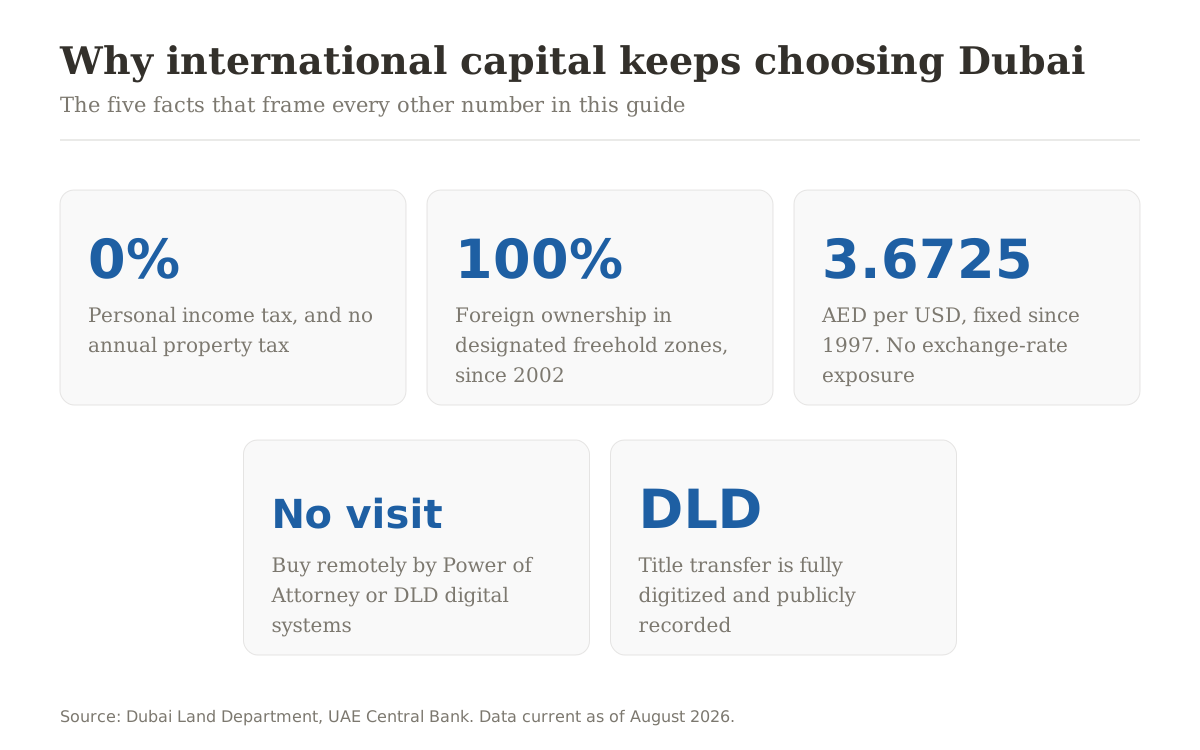
There is no personal income tax and no annual property tax. Foreign nationals have owned freehold in designated zones since 2002, and that means the unit and the land under it, indefinitely. Title transfer is fully digitized and publicly recorded at the Dubai Land Department. You do not need to visit: a Power of Attorney or the DLD digital systems will complete a purchase while you are somewhere else entirely.
Freehold or leasehold
Freehold means you own the unit and the land beneath it, outright, with no ground rent and no expiry. Leasehold means you own the right to use the property for a fixed term, commonly up to 99 years, while the land stays with the freeholder.
Almost every international buyer I work with should be in a freehold zone. The exceptions are narrow enough that if one applies to you, you will know why. I have written the full comparison in freehold vs leasehold.
Two ways in: off-plan or ready
Your first real decision is whether to buy a unit that exists or one that does not yet. The difference is not mainly about price. It is about when the money leaves you and when the income starts.
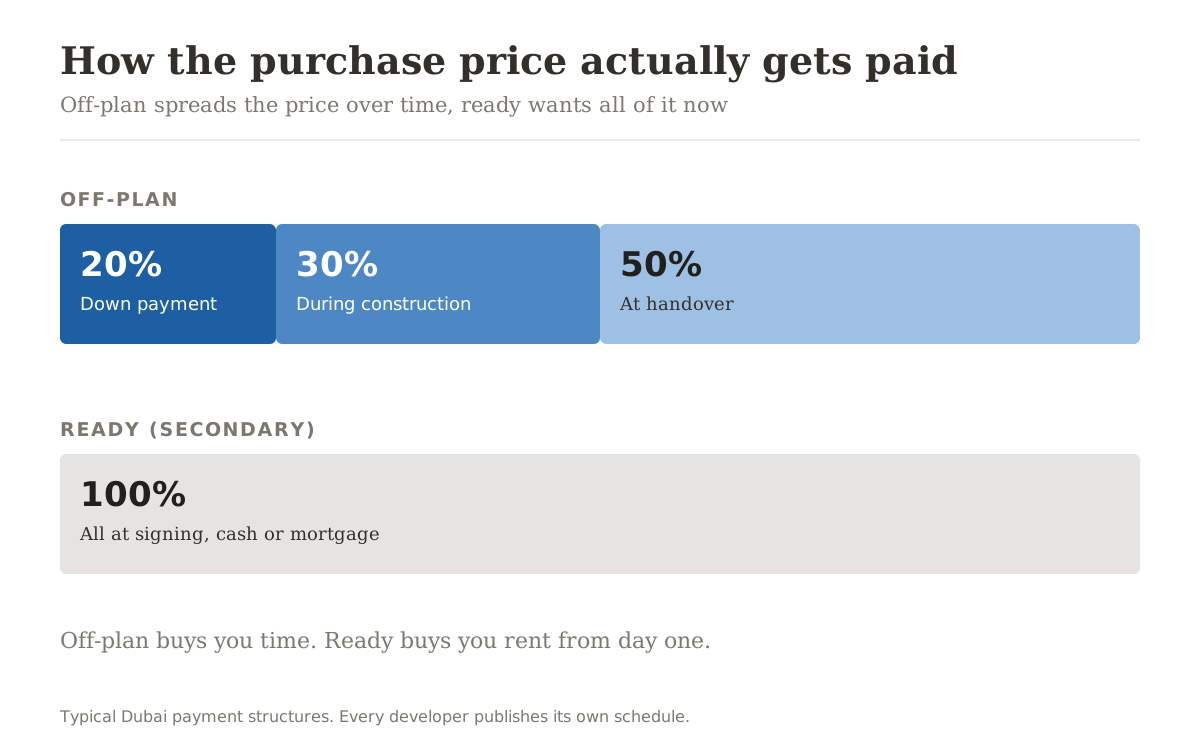
A typical off-plan plan asks 20 percent at signing, about 30 percent across construction, and the balance at handover. A ready unit wants 100 percent at signing, in cash or through a mortgage.
| Off-plan | Ready (secondary) | |
|---|---|---|
| Rental income | None until handover | Immediate, if tenanted |
| Condition | New build, latest specification | Existing, may need refreshing |
| Payment | Spread over construction | All at signing |
| Agency fee | Typically 0 percent | 2 percent |
| Main risk | Construction and completion timeline | You pay today's price for today's asset |
Off-plan pricing reflects new-build condition and the value of paying over time. It is a different structure, not automatically a cheaper or a more expensive one. For a first purchase I usually treat a ready unit in an established area as the lower-risk option, because the income starts on day one and you can inspect exactly what you bought.
If you want to put your own numbers against both, the payment-plan comparator puts cash, mortgage and any off-plan split on the same timeline.
What you can borrow depends on where you stand
You do not have to pay all cash. UAE banks lend to foreign buyers including non-residents. What changes is how much.
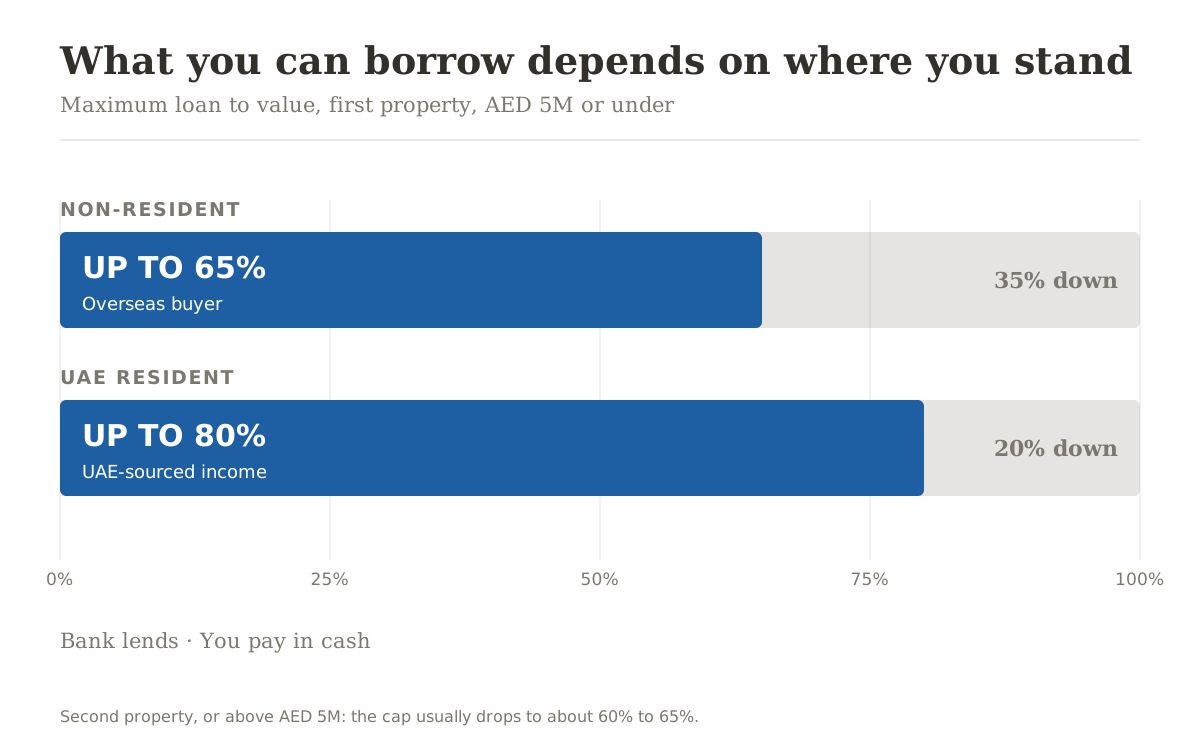
| Non-resident | UAE resident | |
|---|---|---|
| Typical down payment | 35 to 50 percent | 20 percent |
| Indicative fixed rate | From about 4.2 to 4.5 percent | From about 3.75 to 4.75 percent |
| Typical minimum income | Higher, varies by bank | Around AED 15,000 a month |
| Second property, or above AED 5M | About 60 percent LTV or less | About 60 to 65 percent LTV |
Those caps apply to a first property at AED 5,000,000 or under. Above that, or on a second purchase, the cap drops.
Get your loan cap confirmed with a bank before you fall for a specific apartment. I would rather you learn your real budget from a banker than from a disappointment. You can model the monthly payment and the full fee stack on my mortgage calculator.

What leaves your pocket, and what comes back
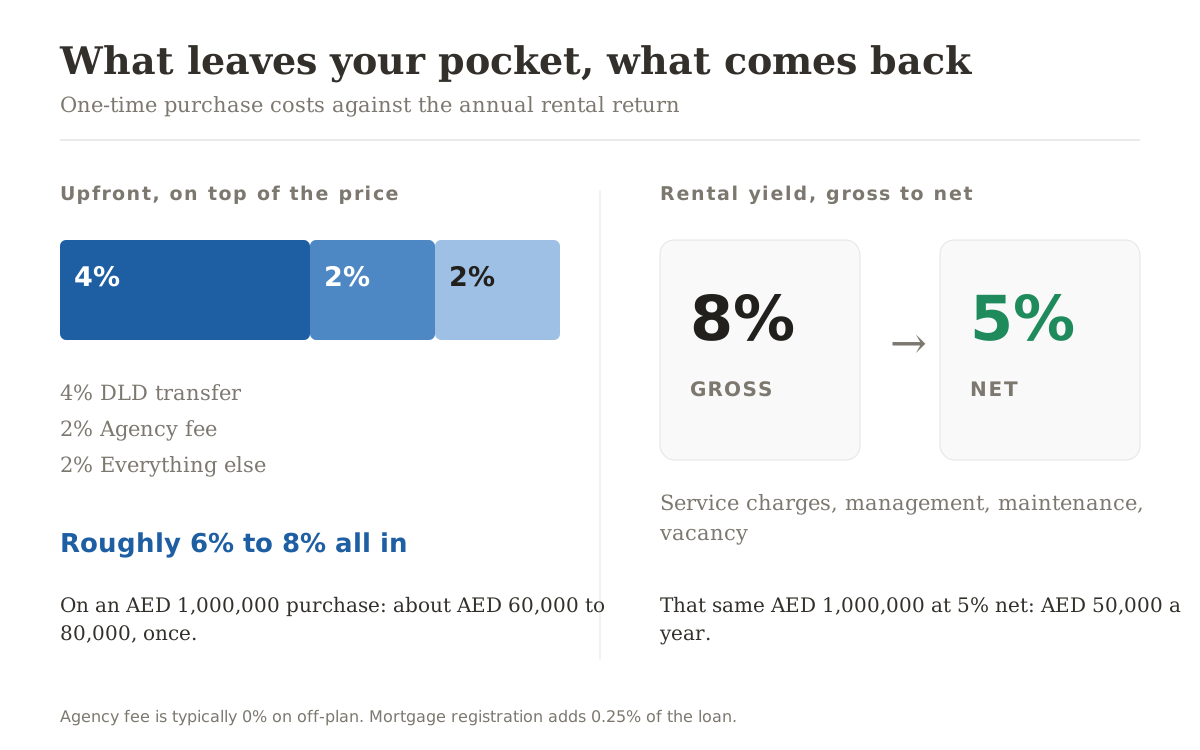
Two numbers decide whether a purchase works: what it costs you once, and what it returns every year.
| Cost | Amount |
|---|---|
| DLD transfer fee | 4 percent of the price |
| Agency fee | 2 percent of the price, typically 0 on off-plan |
| Registration trustee | AED 4,200 (about $1,150) |
| Title deed | AED 250 (about $68) |
| Mortgage registration, if financing | 0.25 percent of the loan |
| Mortgage arrangement, if financing | about 1 percent of the loan |
Budget roughly 6 to 8 percent of the price in one-time costs on ready property. Many developers absorb part of the DLD fee as an incentive on off-plan launches, which is worth asking about before you sign rather than after.
On the income side, Dubai gross yields sit near 8 percent, which is why the city shows up in every comparison table. Net is the number that matters, and it lands closer to 5 percent. The gap is service charges, management, maintenance and vacancy. Service charges are usually the largest single deduction and commonly run AED 10 to 30 or more per square foot per year, which varies enormously by building. Two towers on the same street can be a percentage point apart on net yield for that reason alone.
Work your own building's number on the net yield calculator, and compare areas on the Dubai Rental Yield Index.
What Dubai property actually costs
The citywide average is AED 1,900 per square foot, about $517. Per square metre that is AED 20,450, about $5,569. Averages hide everything interesting, so here is the entry price for a studio by area tier.
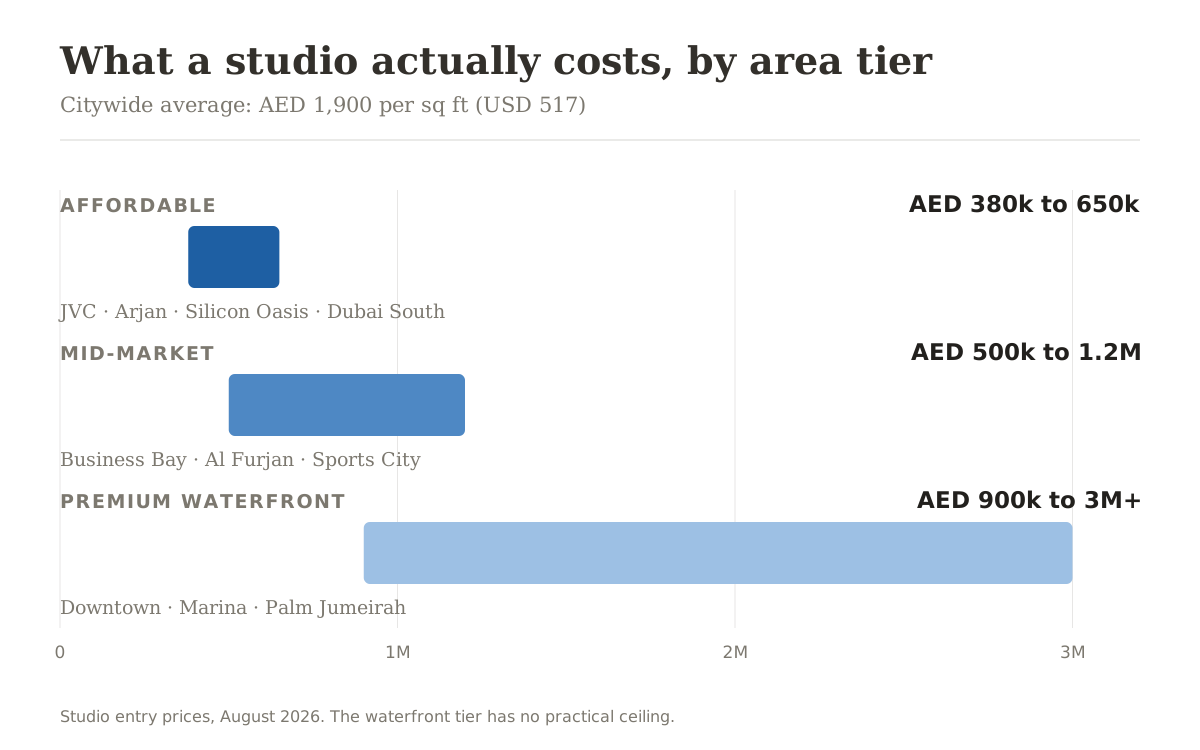
- Affordable, meaning JVC, Arjan, Silicon Oasis and Dubai South: AED 380,000 to 650,000, about $103,000 to $177,000.
- Mid-market, meaning Business Bay, Al Furjan and Sports City: AED 500,000 to 1,200,000, about $136,000 to $327,000.
- Premium waterfront, meaning Downtown, Dubai Marina and Palm Jumeirah: AED 900,000 to 3,000,000 and up, about $245,000 to $817,000 and up.
I price every area on real DLD transaction numbers in my area scorecards, so you can decide from data rather than from a brochure.
Residency through property
This is the part that changed most recently, and a lot of what you will read online is out of date.
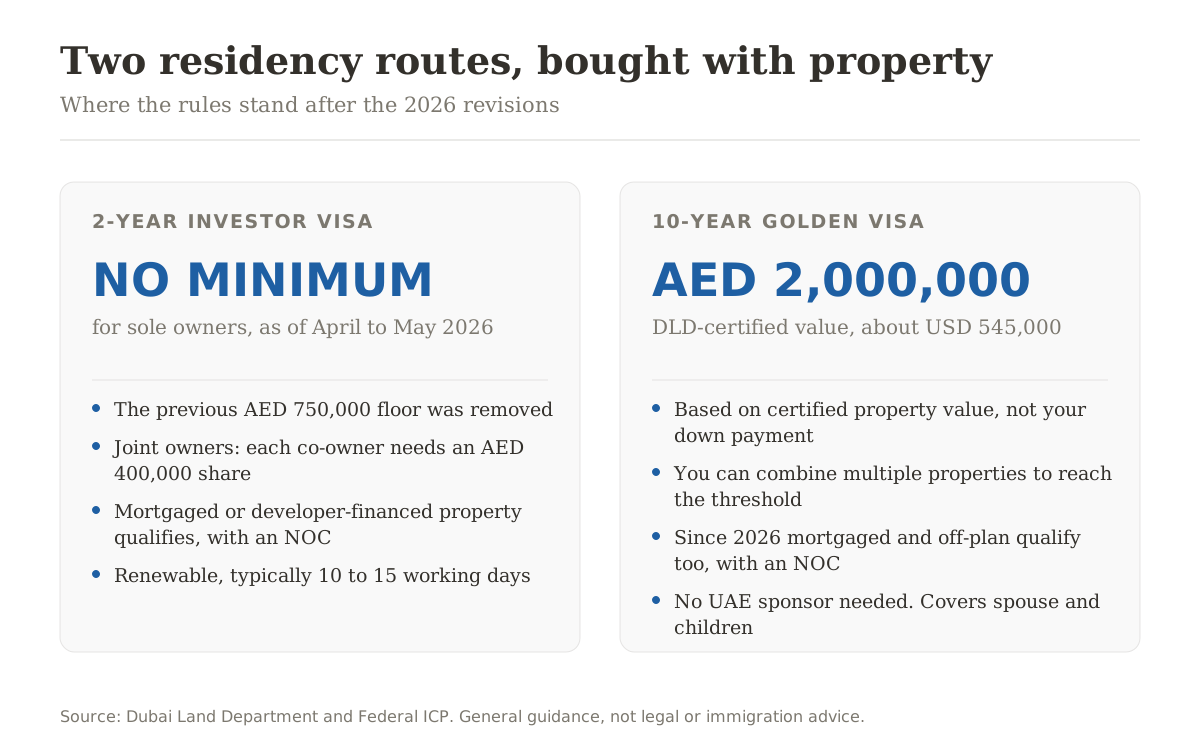
The two-year investor visa used to require AED 750,000. As of April to May 2026 there is no minimum for a sole owner: full ownership of a registered Dubai property at any value now qualifies. Joint owners each need a share of at least AED 400,000, about $109,000. Mortgaged and developer-financed property still qualifies with a bank or developer NOC. It is renewable, processing usually runs 10 to 15 working days, and fees typically land between AED 4,000 and 7,000.
The ten-year Golden Visa sits at AED 2,000,000, about $545,000, measured on DLD-certified value rather than on what you have paid in so far. You can combine multiple properties to reach it. The 2026 update matters here too: mortgaged and off-plan property now qualify once certified value hits the threshold, again with an NOC. No UAE national sponsor is required, and it covers your spouse and children.
The process runs in three steps. DLD confirms the property meets the freehold and valuation criteria. The federal ICP then processes the file, which means passport, security clearance and biometrics. Approval, Emirates ID and the ten-year residency follow.
I have written the detail in the Golden Visa threshold piece.

The purchase, step by step
- Pick a freehold area and decide between off-plan and a ready unit.
- Agree terms with the seller and sign the MOU, also called Form F, at a Registration Trustee office. You pay a 10 percent deposit here.
- Get the No Objection Certificate from the developer, confirming there are no unpaid service charges.
- Transfer ownership at the DLD with a manager's cheque, your ID, the NOC and the signed Form F. You receive the title deed, often the same day.
Register the transaction within 60 days of signing. For a ready unit with documents in order the transfer can complete in one to two weeks. With a mortgage, add a few weeks for the bank. For off-plan the purchase itself is quick, and the handover then depends on construction.
What the numbers don't tell you
The same AED 2,000,000, about $545,000, placed into two different buildings can produce very different outcomes five years from now. That is the part a price list cannot show you. Seven things I check before I let a client commit:
- Developer track record: has this developer delivered on time before.
- Whether the payment plan schedule actually fits your cash flow, not just the headline split.
- The supply pipeline in that area, meaning how much new inventory is coming.
- Net yield rather than gross, after service charges, vacancy and management.
- Exit liquidity: how many comparable units actually resell, and how fast.
- Which visa route fits your ownership structure and your timeline.
- Your financing profile, which changes both what you can borrow and your real return.
The practical side, handled
Every question that comes up once someone is seriously considering a purchase, and the straight answer.
| What you are wondering | The short answer |
|---|---|
| Can I sell later, and is the profit taxed? | No capital gains tax for individual owners in the UAE. Your home country may still tax it. |
| Who manages it while I am not there? | Licensed managers handle tenants, rent and maintenance, typically 5 to 8 percent of rental income. |
| How do I get funds into Dubai? | SWIFT transfer, 2 to 5 business days, with source-of-funds documentation. |
| What if something happens to me? | Non-Muslims can register a DIFC will so the property passes as intended. Worth doing early. |
| What about defects in a new unit? | A snagging inspection before handover catches issues the developer is required to fix. |
| How long does this actually take? | Ready: 30 to 60 days to transfer. Off-plan: days to reserve, then the payment plan runs alongside construction. |
None of that is a reason to hesitate. It is a reason to have someone in your corner who does it daily.
Where people lose money
The 2 percent agency fee is fixed and visible. The costs that actually hurt are the ones nobody quotes you. Off-plan handover dates slip. Service charges vary by building far more than buyers expect. A unit advertised as below market is usually just at market, priced against an asking price rather than against what comparable units actually transacted at.
Sources I trust on the process: Bayut, Property Finder, Engel & Völkers and Newway.
This guide gives you the framework. The right property, financing structure and visa route depend on your budget, your income source, your timeline and what you want the asset to do. Tell me your situation and I will map the options that actually fit it.
Frequently asked questions
Yes. Foreign nationals, resident or not, can buy in Dubai's designated freehold areas with full ownership of the property and the land under it, indefinitely and with no ground rent. The well known zones include Dubai Marina, Palm Jumeirah, Downtown Dubai, Business Bay and JVC. The Dubai Land Department issues the title deed, and the property is yours to sell, lease or pass on. You do not need to visit: a Power of Attorney or the DLD digital systems can complete the purchase.
A non-resident typically borrows up to 65 percent of the value on a first property priced at AED 5,000,000 or under, which means a down payment of 35 to 50 percent. A UAE resident with UAE-sourced income can reach 80 percent, with a 20 percent down payment and a typical minimum income around AED 15,000 a month. Indicative fixed rates run from about 4.2 to 4.5 percent for non-residents. On a second property, or above AED 5,000,000, the cap drops to roughly 60 to 65 percent. Confirm your own cap with a bank before choosing a unit.
Budget roughly 6 to 8 percent of the price on top, in one-time costs. The main items are the 4 percent DLD transfer fee, a 2 percent agency fee, AED 4,200 for the registration trustee and AED 250 for the title deed. If you finance, add 0.25 percent of the loan for mortgage registration and about 1 percent for arrangement. Agency fee is typically zero on off-plan, and many developers absorb part of the DLD fee as a launch incentive.
The citywide average is AED 1,900 per square foot, about USD 517, or AED 20,450 per square metre. By tier, a studio starts around AED 380,000 to 650,000 in JVC, Arjan, Silicon Oasis and Dubai South; AED 500,000 to 1,200,000 in Business Bay, Al Furjan and Sports City; and AED 900,000 to 3,000,000 and up in Downtown, Dubai Marina and Palm Jumeirah.
Yes, on two routes. The two-year investor visa previously required AED 750,000; as of April to May 2026 there is no minimum for a sole owner, so full ownership of a registered Dubai property at any value qualifies. Joint owners each need a share of at least AED 400,000. The ten-year Golden Visa starts at AED 2,000,000 of DLD-certified value, and since 2026 mortgaged and off-plan property qualify too, with a bank or developer NOC. No UAE sponsor is needed and both cover spouse and children. Residency is tied to the property: hold it, and the residency holds with it.
Gross yield in Dubai sits near 8 percent and is the number most listings quote. Net lands closer to 5 percent once you deduct service charges, management, maintenance and vacancy. Service charges are usually the largest single deduction and commonly run AED 10 to 30 or more per square foot per year, which varies enormously by building. Two towers on the same street can differ by a full percentage point of net yield for that reason alone.